



Ahoy, fellow mariners! As the days shorten and the air gets a bit crisper, many of us feel that familiar twinge – the boating season is winding down. While it’s bittersweet to think of putting our beloved vessels away, proper winterization isn’t just a chore; it’s an act of love. It’s how we ensure our floating dreams are protected from the harsh realities of winter, ready to launch us into new adventures come spring. As someone who’s seen countless boats come through the yard, from nimble day sailers under 25 ft to robust bluewater cruisers over 40 ft, I can tell you: a little effort now saves a lot of heartache (and money!) later.
Table Of Content
- Why Winterize Your Boat? The Risks of Neglect
- Your Step-by-Step Winterization Checklist
- 1. The Engine and Propulsion System: Your Boat’s Heartbeat
- 2. The Freshwater System: Galley & Showers
- 3. The Head (Toilet) System: Sanitation is Key
- 4. The Bilge: Clean & Dry
- 5. electrical systems & Electronics
- 6. The Hull & Exterior: A Clean Slate for Spring
- 7. Rigging & Sails: For Sailboat Enthusiasts
- 8. The Interior: Home Away From Home
- To DIY or Not to DIY?
- Your Next Adventure Awaits
Think of it this way: your boat is more than just fiberglass and machinery; it’s your ticket to freedom, family memories, and sunsets on the horizon. Protecting that investment, whether it’s a sleek Axopar 28 or a sturdy Catalina 30, means understanding the critical steps to prepare it for the cold slumber. Let’s dive into making sure your boat stays safe, reliable, and beautiful for years to come.
Why Winterize Your Boat? The Risks of Neglect
The biggest threat during winter is freezing water. Water expands when it freezes, and if it’s trapped in your engine block, plumbing lines, or even your bilge, it can cause catastrophic damage – cracked engine blocks, burst pipes, and expensive repairs. But it’s not just ice; prolonged dampness can lead to mold, mildew, and corrosion. Proper winterization addresses all these threats, ensuring your vessel emerges from its off-season rest as vibrant as ever.

Your Step-by-Step Winterization Checklist
Whether you have a powerboat with an inboard diesel like a Yanmar or Volvo Penta, an outboard, or a sailboat with a saildrive, the core principles apply. Here’s how to tackle it:
1. The Engine and Propulsion System: Your Boat’s Heartbeat
This is arguably the most critical component to protect. Freezing water in the cooling passages is a boat owner’s worst nightmare.
- For outboard engines:
- Flush the System: Connect earmuffs to a freshwater hose and run the engine for 10-15 minutes to flush out saltwater and deposits.
- Stabilize Fuel: Add a fuel stabilizer to the tank and run the engine for a few minutes to circulate it. This prevents fuel degradation and gumming.
- Fog the Engine: While the engine is running, spray fogging oil into the carburetors or air intake until it stalls. This coats internal components, preventing rust.
- Change Gear Oil: Drain the lower unit’s gear oil and refill it. Look for milky oil, which indicates a water leak in the seals.
- Lubricate & Grease: Grease all zerk fittings and moving parts.
- Disconnect Battery: Remove the battery, clean the terminals, and store it in a cool, dry place on a trickle charger.
- For Inboard Engines (Gasoline & Diesel):
- Stabilize Fuel: Fill your fuel tank to prevent condensation and add a marine-grade fuel stabilizer. Run the engine to circulate.
- Change Oil & Filter: Old, acidic oil can cause corrosion over winter. Change the engine oil and filter.
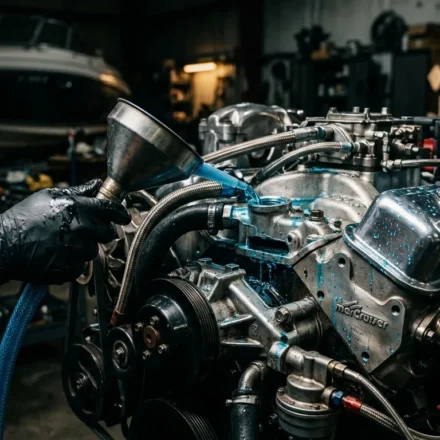
- Flush & Antifreeze: This is vital.
- Raw Water Cooled Engines: Disconnect the raw water intake hose and insert it into a bucket of non-toxic marine antifreeze (propylene glycol). Run the engine until antifreeze exits the exhaust.
- Freshwater Cooled Engines (Closed Cooling System): Ensure the coolant mix in the closed system is appropriate for your winter temperatures. The raw water side still needs flushing with antifreeze as above.
- Fog the Engine: For gasoline inboards, fog the cylinders. Diesel engines often benefit from running on a blend of fuel and anti-gel additives.
- Check & Replace Filters: Replace fuel filters and inspect air filters.
- Saildrives & Stern Drives: Change the gear oil. Inspect bellows for cracks or wear – critical for preventing water ingress.
- Remove Batteries: Clean, charge, and store them, or leave them onboard on a smart charger if shore power is available and reliable.
2. The Freshwater System: Galley & Showers
Drain all freshwater tanks, hot water heaters, and lines. Once drained, pump non-toxic marine antifreeze through all faucets, shower heads, and the hot water heater bypass (if applicable) until it flows out. This prevents freezing and protects pumps.
3. The Head (Toilet) System: Sanitation is Key
Flush the toilet thoroughly with freshwater. Then, pump non-toxic marine antifreeze through the intake and discharge lines until it exits the discharge seacock. This protects the pump, hoses, and holding tank from freezing and helps inhibit odors.
4. The Bilge: Clean & Dry
Thoroughly clean the bilge – remove all debris, oil, and water. A dry bilge prevents mold and mildew. Ensure the bilge pump is operational and consider leaving a small amount of non-toxic antifreeze in the bilge to prevent any residual water from freezing.
5. electrical systems & Electronics
Besides battery care (mentioned above), switch off all circuit breakers. Remove expensive electronics (GPS, fish finders, VHF radios) and store them in a climate-controlled environment. Cover any remaining electronics to protect them from dust and moisture.
6. The Hull & Exterior: A Clean Slate for Spring
- Cleaning: Give your hull a good scrub to remove marine growth, grime, and salt. Use a hull cleaner for stubborn stains.
- Waxing: Apply a good coat of marine wax to fiberglass hulls. This provides an extra layer of protection against UV rays and environmental pollutants, crucial whether you have a displacement hull or a planing hull.
- Antifouling (if hauled out): Inspect your bottom paint. If it’s nearing the end of its life, plan for a fresh coat during your annual haul-out in the spring.
- Covering: Invest in a good quality, breathable boat cover. This protects your boat from snow, ice, and UV damage while allowing air circulation to prevent mold. Ensure it’s well-secured to prevent wind damage.
7. Rigging & Sails: For Sailboat Enthusiasts
For sailors, this is essential. Whether you have a sloop, ketch, or cutter rig, proper sail and rigging care prolongs their life.
- Remove Sails: Take down your mainsail, genoa, and any other sails (spinnaker, etc.). Clean them thoroughly with freshwater, inspect for damage, and fold or roll them loosely. Store them in a dry, rodent-free, climate-controlled area.
- Inspect Rigging: Check standing rigging (wires supporting the mast) and running rigging (ropes) for wear, fraying, or corrosion. Lubricate turnbuckles.
- Remove Lines: Take off dock lines and fender lines, clean them, and store them.
8. The Interior: Home Away From Home
- Clean & Declutter: Remove all food, linens, cushions, and anything that can attract pests or harbor moisture. Clean all surfaces thoroughly.
- Ventilation: Open lockers, drawers, and cabin doors to promote air circulation. Consider using moisture absorbers (e.g., DampRid) or a dehumidifier if you have shore power.
- Pest Control: Place rodent deterrents (mothballs, dryer sheets, electronic repellents) to keep unwanted guests out.
To DIY or Not to DIY?
While many of these steps are manageable for the average boat owner, especially for smaller vessels, don’t hesitate to call in a professional for complex tasks like engine winterization, especially for larger cruisers or bluewater boats. A certified marine technician will ensure everything is done correctly, giving you peace of mind.
Your Next Adventure Awaits
Winterizing your boat might seem like a lot of work, but trust me, it’s an investment in your future joy. By following these steps, you’re not just protecting an asset; you’re safeguarding the promise of future journeys. Imagine the anticipation of spring, knowing your Beneteau Oceanis, Jeanneau Sun Odyssey, or classic Herreshoff design is waiting, perfectly preserved, for that first glorious day back on the water.
So, take a deep breath, roll up your sleeves, and get your boat ready for its well-deserved rest. When spring arrives, you’ll be ready to cast off lines, feel the wind in your sails, or the hum of your engine, and continue writing your unforgettable boating story. Happy winterizing, and we’ll see you on the water!