

Choosing the Best Fish Finder and Chartplotter: Navigating and Locating Your Catch

Ahoy, fellow mariners! From the serene solitude of a sunrise troll to the adrenaline rush of hooking a trophy tuna miles offshore, the water calls to us with irresistible allure. For decades, our seafaring ancestors navigated by stars, soundings, and sheer instinct. While that romantic notion still holds a place in our hearts, modern technology has gifted us tools that not only enhance our experience but fundamentally transform how we interact with the marine environment. Today, we’re diving deep into two indispensable pieces of marine electronics: the fish finder and the chartplotter. These aren’t just gadgets; they are your eyes beneath the surface and your unwavering guide across the vast expanse, enabling safer navigation and putting you squarely on top of the action.
Table Of Content
- The Dynamic Duo: Understanding Fish Finders and Chartplotters
- What is a Fish Finder and How Does it Work?
- What is a Chartplotter and Why is it Essential?
- The Synergy of Multi-Function Displays (MFDs)
- Decoding Fish Finder Technology: Features That Matter for Anglers
- Transducer Deep Dive: The Heartbeat of Your Sonar
- Advanced Sonar Technologies: CHIRP, DownScan, SideScan, and Beyond
- Display & Power: Seeing the Unseen
- Navigational Prowess: What to Look for in a Chartplotter
- Chart Details and Coverage: Your Digital Map
- GPS Accuracy and External Antennas
- Connectivity: Building a Smart Helm
- User Interface and Ergonomics
- Tailoring Your System: Matching Tech to Your Vessel and Adventures
- Small Boats & Kayaks: Portability and Simplicity
- Coastal Cruisers & Weekend Warriors: Balancing Performance and Budget
- Offshore Fishing Rigs & Blue Water Yachts: High-Performance Integration
- A Pro’s Tip: Future-Proofing Your Investment
The Dynamic Duo: Understanding Fish Finders and Chartplotters
In the world of marine electronics, the fish finder and chartplotter are often described as a boat’s brain and eyes, working in perfect harmony. While they each serve distinct primary functions, their true power is unlocked when they operate together, especially in a combined Multi-Function Display (MFD) unit. Understanding what each component does individually is the first step to choosing the best system for your vessel and your adventures.
What is a Fish Finder and How Does it Work?
At its core, a fish finder is a sonar device designed to detect objects underwater. Think of it as sending out a ping and listening for the echo. A specialized component called a transducer emits sound waves into the water. When these sound waves encounter an object – be it the seabed, a submerged wreck, a reef, or, indeed, a school of fish – they bounce back to the transducer. The fish finder then precisely measures the time it takes for these echoes to return and their intensity, translating this data into a visual representation on your screen. This allows you to “see” the bottom contour, identify underwater structure, and pinpoint those elusive fish targets.
The magic truly happens on the display, where varying colors and shapes depict what’s beneath your hull. Modern fish finders offer incredible clarity, helping anglers distinguish between baitfish, larger predators, and even thermoclines – layers of water with different temperatures that can indicate where fish might be holding. Without a good fish finder, you’re essentially fishing blind, hoping for a lucky cast. With one, you’re armed with crucial intelligence.
What is a Chartplotter and Why is it Essential?
While the fish finder shows you what’s below, the chartplotter shows you where you are and where you’re going. It’s essentially a sophisticated GPS navigation device specifically tailored for marine use. Your chartplotter displays highly detailed electronic navigational charts, presenting your boat’s precise position, depth contours, aids to navigation (like buoys and lighthouses), and potential hazards such as shoals or submerged rocks. With a chartplotter, you can confidently set waypoints, plan intricate routes, track your progress, and always know exactly where you are in relation to your surroundings, even in challenging conditions like fog or darkness.
For me, a seasoned professional who’s seen countless navigation scenarios, a reliable chartplotter isn’t just about convenience; it’s a non-negotiable safety device. I remember a particularly foggy morning off the coast of Maine when a client, initially skeptical about investing in a high-end unit, was utterly convinced after his chartplotter guided us safely through a dense pea-souper, avoiding lobster pots and unseen ledges with ease. It’s an investment in peace of mind and preventing costly mistakes.
The Synergy of Multi-Function Displays (MFDs)
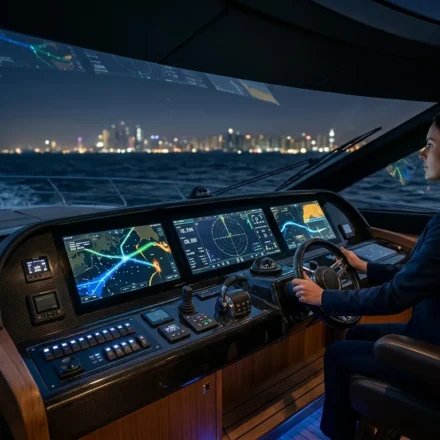
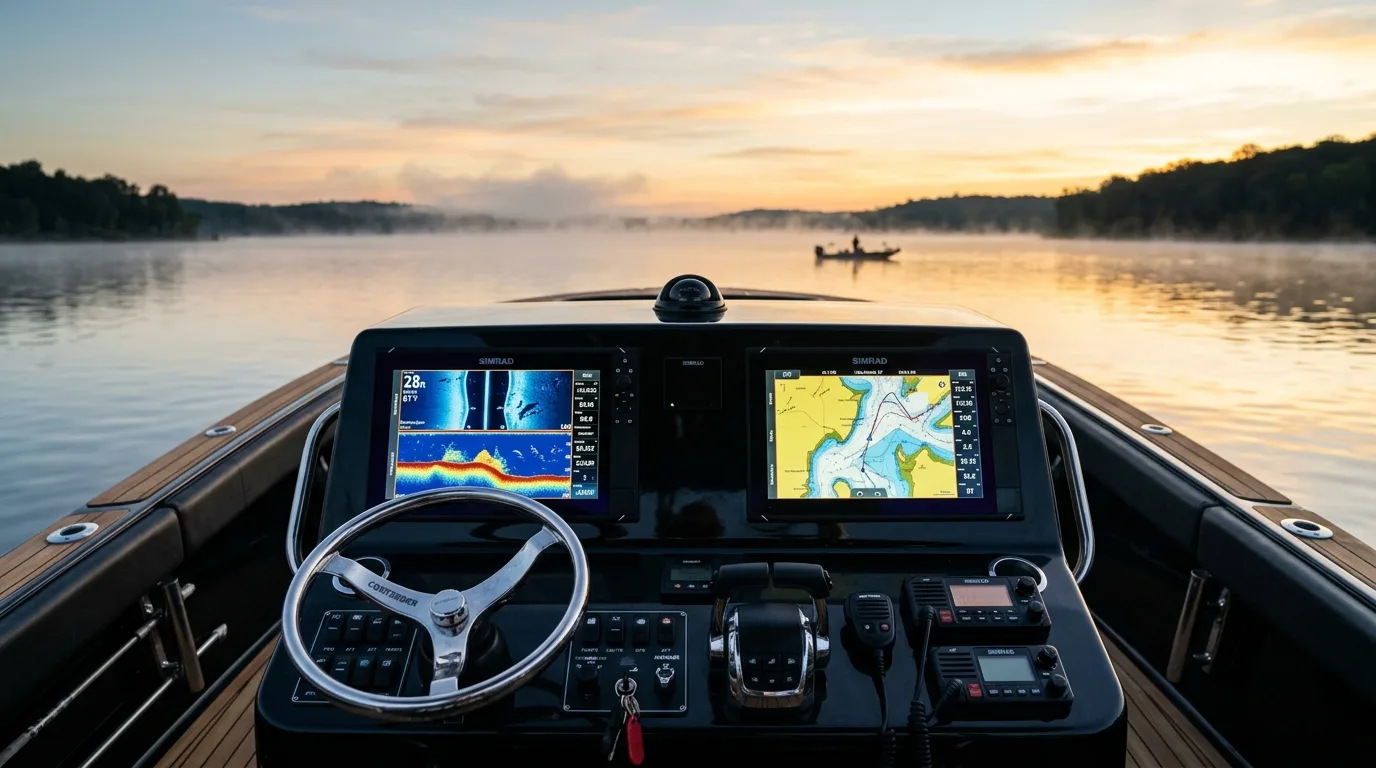
In today’s marine electronics market, it’s rare to find a high-quality fish finder or chartplotter sold completely independently. Most manufacturers offer them as combined units known as Multi-Function Displays (MFDs). An MFD integrates both technologies into a single, sleek display, often with an intuitive touchscreen interface. This not only declutters your helm but also allows for seamless interaction between navigation and fish-finding data. Imagine seeing your boat’s position on a detailed chart while simultaneously viewing sonar returns from a productive reef directly below – that’s the power of an MFD.
The beauty of MFDs extends beyond just fish finding and charting. Many modern units serve as the central hub for a boat’s entire electronics network, connecting to radar, autopilot, engine data, VHF radio, and even entertainment systems. This integrated approach simplifies operation, enhances situational awareness, and provides a truly comprehensive view of your vessel’s operation and environment.
Decoding Fish Finder Technology: Features That Matter for Anglers
When it comes to selecting a fish finder, the sheer volume of jargon and features can be overwhelming. But fear not, understanding a few key technologies will empower you to make an informed decision that truly enhances your angling success.
Transducer Deep Dive: The Heartbeat of Your Sonar
The transducer is arguably the most critical component of any fish finder. It’s the ear and mouth of your sonar system, sending and receiving those vital sound waves. The type, mounting location, and frequencies it operates on significantly impact performance.
- Mounting Options:
- Transom-Mount: Easiest to install for most small to medium-sized boats (under 25 feet). It bolts to the transom, positioning the transducer below the hull. Generally good performance for recreational use.
- Through-Hull: Considered the gold standard for larger vessels, sportfishing boats, and offshore cruisers. It requires drilling a hole in the hull, but offers the best performance with minimal interference from turbulence. Professional installation is highly recommended.
- In-Hull (Shoot-Through): Mounted inside the hull, firing through the fiberglass. No drilling required, but performance is slightly reduced as the signal has to pass through the hull material. A good compromise for certain hull types or when drilling is not an option.
- Trolling Motor Mount: Specifically designed to attach to the shaft of a trolling motor, ideal for freshwater bass boats or kayak fishing, providing clear readings without obstruction.
- Frequencies: Traditional sonar typically uses dual frequencies like 50/200 kHz. Lower frequencies (e.g., 50 kHz) penetrate deeper into the water column and are excellent for deep-sea fishing, though with less detail. Higher frequencies (e.g., 200 kHz) provide finer detail and better target separation in shallower water, perfect for identifying structure.
Advanced Sonar Technologies: CHIRP, DownScan, SideScan, and Beyond
This is where modern fish finders truly shine, offering anglers an unparalleled view of the underwater world.
| Technology | Description | Primary Benefit | Best Use Case |
|---|---|---|---|
| CHIRP Sonar | Compressed High-Intensity Radiated Pulse. Emits a wide range of frequencies (e.g., 80-160 kHz) instead of a single frequency. | Incredibly clear, high-resolution images with superior target separation; better depth penetration. | All-around fishing, especially for distinguishing individual fish from bait balls or structure. |
| DownScan Imaging (StructureScan/ClearVü) | Photographic-like views directly below your boat, showing detailed images of structure and fish. | Crystal-clear, intuitive understanding of submerged trees, wrecks, and rock piles. | Bottom fishing, targeting structure, identifying bait schools directly beneath the boat. |
| SideScan Imaging (StructureScan/SideVü) | Scans to the port and starboard sides of your boat, covering a wide area. | Expansive views of structure and fish to the sides, great for covering ground quickly. | Searching large areas for hidden structure, trolling along ledges, finding wrecks. |
| Live Sonar (Garmin LiveScope, Lowrance ActiveTarget, Humminbird Mega Live) | Real-time, video-like sonar images showing fish movements and lure presentation. | Watch fish react to your bait, understand their behavior in real-time. | Ice fishing, targeting specific fish, sight fishing in open water, observing lure action. |
For serious anglers on vessels like a Boston Whaler or Grady-White, combining CHIRP with DownScan and SideScan is transformative. You get the detailed clarity of CHIRP for individual fish, the photographic precision of DownScan for structure directly below, and the wide-area scanning of SideScan to locate schools off to the sides. Live sonar, while a premium feature, is a game-changer for competitive anglers, allowing them to see fish react to their lure in real-time – it’s like having an underwater camera without the turbidity issues.
Display & Power: Seeing the Unseen
The best sonar in the world is useless if you can’t see the display. Prioritize screen size, resolution, and brightness. A larger screen (e.g., 9-12 inches) provides more real estate to view multiple sonar technologies simultaneously or split-screen with your chartplotter. High resolution ensures crisp, detailed images, and excellent brightness with anti-glare properties is crucial for clear viewing in direct sunlight. Power, measured in RMS (Root Mean Square) wattage, dictates how deep your fish finder can penetrate and the clarity of returns from those depths. Higher wattage (e.g., 1,000 watts RMS or more) is essential for deep-sea fishing or targeting pelagic species in the abyss.
Leading brands like Garmin, Lowrance, Simrad, and Raymarine consistently deliver excellent systems across various price points and feature sets. Each offers its unique take on user interface and specific proprietary technologies, so exploring their ecosystems can help you find a comfortable fit.
Navigational Prowess: What to Look for in a Chartplotter
While the thrill of the catch is undeniable, getting to and from your fishing grounds safely and efficiently relies heavily on your chartplotter. This is your digital roadmap, your guardian against unseen hazards, and your strategic planner for any voyage.
Chart Details and Coverage: Your Digital Map
The quality and detail of the electronic charts are paramount. Ensure the unit comes preloaded with comprehensive charts for your primary cruising and fishing areas. Leading chart providers like Navionics and C-MAP offer incredibly detailed cartography, often including high-definition contours (useful for finding ledges and drop-offs where fish hold), tide and current information, port services, and even satellite imagery overlays for a real-world perspective. Auto-routing features, which suggest safe routes based on your boat’s draft, are a fantastic convenience, but always remember to use your own judgment and confirm the route before blindly following. After all, technology assists, it doesn’t replace seamanship.
GPS Accuracy and External Antennas
Modern chartplotters boast highly accurate internal GPS receivers, often enhanced with WAAS (Wide Area Augmentation System) in North America or EGNOS/SBAS in other regions. These systems provide sub-meter accuracy, which is more than sufficient for most recreational boating. However, for boats with metal hardtops, enclosed helms, or those operating in areas with obstructed satellite views, an external GPS antenna can significantly boost signal reception and accuracy, ensuring you always know your precise location, even in challenging conditions. The reliability of your position fix is non-negotiable for safe navigation.
Connectivity: Building a Smart Helm
This is where your chartplotter truly becomes the brain of your boat. Look for NMEA 2000 connectivity – the industry standard network that allows your chartplotter to seamlessly communicate with virtually every other device on your vessel. This means you can display engine data, control your autopilot, overlay radar images, receive AIS (Automatic Identification System) data from other vessels, and even monitor onboard systems like tank levels or bilge pumps, all from a single screen. Wi-Fi and Bluetooth connectivity are also incredibly handy for software updates, mirroring your display to a tablet, or integrating with marine apps on your smartphone. A fully integrated helm, particularly on coastal cruisers like a Beneteau Oceanis or Jeanneau Sun Odyssey, provides unparalleled situational awareness and control.
I always advise clients to consider connectivity a major factor. A standalone chartplotter is good, but one that talks to your radar, autopilot, and engine sensors creates a cohesive system that vastly improves safety and operational efficiency. It’s the difference between disparate tools and a unified command center.
User Interface and Ergonomics
The interface is crucial for ease of use, especially when conditions are less than ideal. Touchscreens offer intuitive control and quick access to functions, but buttons and rotary dials can be more precise when bouncing through waves or wearing gloves. Many premium units offer a hybrid approach. Test the interface if possible, or watch videos of it in action. Does it feel logical? Can you quickly access critical functions like zooming or changing sonar views? A clunky interface can be a major frustration and even a safety hazard in a pinch.
Tailoring Your System: Matching Tech to Your Vessel and Adventures
There’s no one-size-fits-all solution when it comes to marine electronics. The ideal fish finder and chartplotter setup will perfectly align with your boat type, your primary activities, and your budget.
Small Boats & Kayaks: Portability and Simplicity
For smaller craft like kayaks, jon boats, or inflatable tenders, portability and simplicity are key. A compact MFD (5-7 inches) with basic CHIRP sonar and chartplotting functions is often sufficient. Many portable units exist that clamp onto the transom and use suction cup transducers, making them easy to install and remove. Look for models with good battery life or easy 12V connections. Brands like Humminbird PiranhaMax or Garmin Striker series offer excellent value in this segment.
Even for a small craft, knowing your depth and basic navigation is crucial. You don’t need a full-blown offshore system, but a reliable, compact unit can prevent groundings and help you find those fish-holding pockets in a lake or estuary.
Coastal Cruisers & Weekend Warriors: Balancing Performance and Budget
If you own a center console, bay boat, or a mid-sized sailboat (say, 20-40 feet) used for coastal cruising, family outings, and serious weekend fishing, you’ll want a more robust setup. An 8-12 inch MFD with advanced CHIRP sonar, DownScan, and SideScan is an excellent choice. This size offers enough screen real estate to view multiple data windows simultaneously. Consider NMEA 2000 connectivity to integrate with your engine data, autopilot, and potentially a basic radar if you venture out in low visibility. Brands like Simrad GO, Lowrance Elite FS, or Garmin ECHOMAP UHD are very popular in this category, offering a fantastic balance of features and cost.
This is the sweet spot for many boaters, offering significant upgrades in fish-finding capabilities and navigational confidence without venturing into the highly specialized (and expensive) professional-grade systems. Investing in a quality through-hull transducer here will pay dividends in performance.
Offshore Fishing Rigs & Blue Water Yachts: High-Performance Integration
For dedicated offshore sportfishing boats (like a high-performance Contender or Viking Yacht) or larger blue water cruising yachts, the sky’s the limit. We’re talking multiple large-screen MFDs (12-16 inches or more) integrated into a comprehensive network. This includes high-power dual-frequency CHIRP transducers (1-3 kW), radar (both traditional pulse and solid-state Doppler), autopilot, advanced engine management, thermal cameras, and even satellite communication systems. Live sonar is becoming increasingly common for these boats. NMEA 2000 is a must, allowing all systems to communicate and display data across any screen on the helm, tower, or cockpit. Brands like Garmin GPSMAP, Simrad NSS evo3S, Lowrance HDS Pro, and Raymarine Axiom are the go-to choices for these demanding applications.
In these scenarios, redundancy is also a key consideration. Having a backup chartplotter or even a completely separate system for critical navigation functions is a wise safety measure, especially when venturing hundreds of miles offshore. Remember, reliability under pressure is paramount when lives can depend on your electronics.
A Pro’s Tip: Future-Proofing Your Investment
Marine electronics evolve rapidly. While you can’t perfectly predict the future, you can make smart choices today. Look for systems that are software-updateable via Wi-Fi or SD card. Choose units with robust NMEA 2000 connectivity to allow for easy expansion as new technologies become available (e.g., adding a live sonar transducer later). Consider brands with a strong reputation for customer support and a wide network of authorized installers. My personal philosophy is always to buy the best quality you can reasonably afford; the difference in performance and longevity often far outweighs the initial cost savings of a cheaper unit. Your confidence and safety on the water are priceless.
Choosing the best fish finder and chartplotter isn’t just about buying a gadget; it’s about investing in a safer, more enjoyable, and ultimately more successful boating experience. Take your time, research your options, and don’t hesitate to consult with experienced marine electronics dealers. Happy boating, and may your lines always be tight!