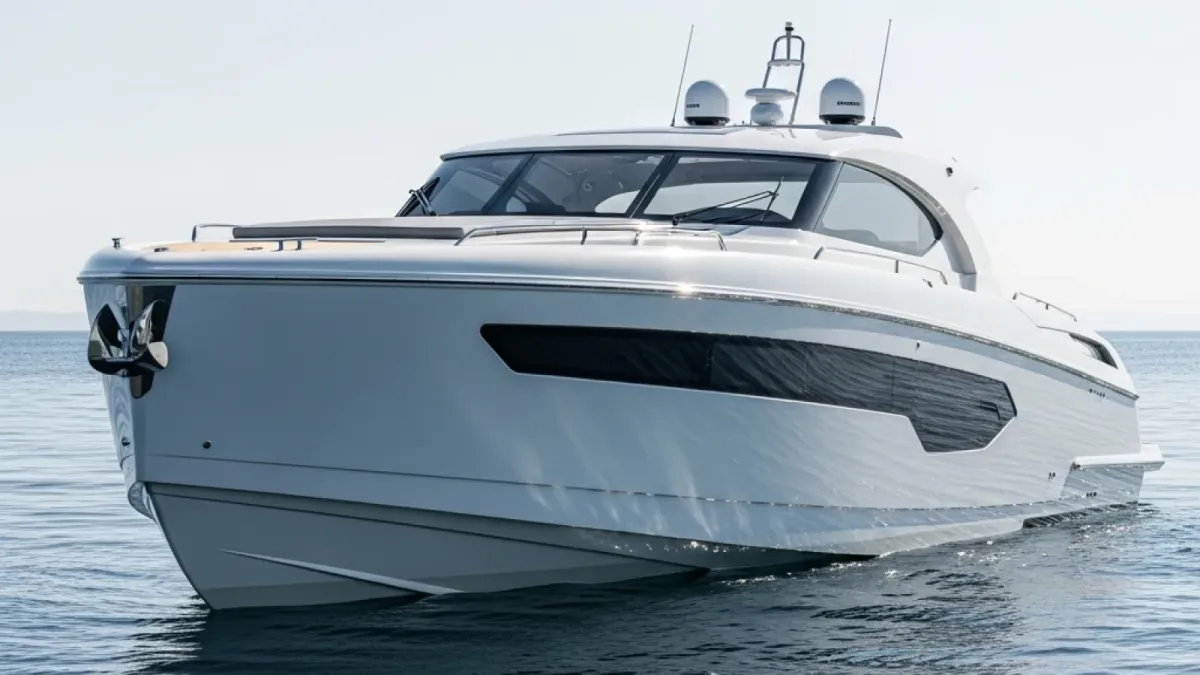
Quick answer: Paragon boats are heavy-duty Scandinavian all-weather cruisers engineered with deep-V hulls (up to 24.5-degree deadrise) and robust GRP composite construction. Designed primarily for extreme cold-water performance and offshore safety, they feature enclosed pilot houses, diesel sterndrives (such as Volvo Penta D4/D6), heavy rubber collars, and exceptional sea-keeping abilities in rough seas.
Built for the North Sea: Scandinavian Engineering and Hull Design
The core identity of a Paragon vessel lies beneath the waterline. Unlike standard production cruisers that use moderate deadrise angles to maximize interior cabin volume, Paragon utilizes an aggressive deep-V hull geometry ranging between 20 and 24.5 degrees at the transom. This sharp entry cuts through steep head seas cleanly, reducing slamming forces and preserving speed when conditions deteriorate. Reinforced with heavy longitudinal stringers and hand-laid vacuum-infused vinyl ester resin, the hull structure absorbs high kinetic impacts without flexing or creaking.
Safety on deck is heavily influenced by commercial workboat architecture. Deep walkaround side decks, solid stainless steel pulpits measuring 32 mm in diameter, and high interior bulwarks ensure crew members remain securely inside the vessel while working lines or fending off in tight berths. Surrounding the sheer line is a thick, heavy-duty polyurethane or heavy-rubber rubbing strake that acts as a continuous bumper. This feature allows skippered maneuvers against commercial piers or pilot stations without risk of crazing the gelcoat or damaging structural laminates.
Every square inch of the exterior deck is treated with non-skid surfaces, accompanied by oversized, self-draining deck scuppers capable of purging green water rapidly during heavy weather encounters. Integrated storm shutters and heavy toughened glass windows in the wheelhouse ensure structural watertight integrity when solid seas wash over the foredeck. These features make Paragon a top contender for boaters looking into specialized motor yachts and commuter craft built for harsh environments.
Mechanical Reliability and On-the-Water Ergonomics
In cold-water boating, engine power is directly tied to safety. Paragon pairs its displacement hulls almost exclusively with high-torque diesel propulsion systems, primarily single or twin Volvo Penta D4 (300–320 hp) and D6 (340–440 hp) sterndrives equipped with Aquamatic Duoprop drives. These powerplants deliver instantaneous low-end punch to get heavy, deep-V displacement hulls onto plane efficiently while maintaining fuel economy across cruising speeds of 25 to 32 knots.
Inside the pilothouse, ergonomics reflect a commercial wheelhouse standard. The helm position features full 360-degree panoramic visibility through reverse-angled front windshields, which minimize sun glare and shed water rapidly in rain or sea spray. High-output defroster nozzles powered by engine coolant keep windshields clear of condensation in freezing ambient air. Dampened suspension seating by brands like KAB or Grammer absorbs vertical impact forces, protecting the skipper’s spine during high-speed runs through steep chop.
| Feature | G23 Paragon Price | Nautique G25 Paragon Price |
|---|---|---|
| Length | 23 feet | 25 feet |
| Passenger Capacity | Medium (ideal for families) | Large (ideal for groups) |
| Performance | High maneuverability | Maximum power & wake size |
| Price Range | Premium, but lower | Highest in lineup |
| Best For | Competitive riders | Luxury group outings |
Climate control systems inside Paragon cabins are thoroughly isolated from external temperature extremes. High-density closed-cell foam insulation lines the inner hull hullside and headliners, preventing thermal bridging and condensation buildup. Integrated diesel heating systems (typically 4kW Webasto or Eberspächer units) duct heat into both the main salon, forward berth, and head compartments, maintaining a warm, dry interior atmosphere even when outside air temperatures dip well below freezing.
Paragon Models Comparison: Specifications and Performance
Understanding how different Paragon models perform helps match the right hull size to your intended cruising grounds and operational demands. The range covers agile daily commuters like the Paragon 25 up to long-range offshore cruisers like the Paragon 31. Below is a comprehensive specification matrix comparing the primary models across critical engineering parameters.
| Model | LOA (ft / m) | Beam (ft / m) | Draft (ft / m) | Displacement (kg) | Deadrise | Standard Engine | Top Speed (knots) |
|---|---|---|---|---|---|---|---|
| Paragon 25 | 27' 11" / 8.52m | 9' 10" / 3.00m | 3' 7" / 1.10m | 3,490 kg | 24.5° | Volvo Penta D4-300 | 36 - 38 |
| Paragon 28 | 30' 6" / 9.30m | 9' 10" / 3.00m | 3' 7" / 1.10m | 4,250 kg | 24.5° | Volvo Penta D6-340 | 37 - 39 |
| Paragon 31 Fly | 34' 9" / 10.59m | 11' 1" / 3.38m | 3' 11" / 1.18m | 6,185 kg | 20.0° | Twin Volvo Penta D4-300 / Single D6-400 | 38 - 40 |
The entry point Paragon 25 remains an ideal multi-purpose option for fast coastal transport, offering tight turning radii and swift response to trim tab inputs. Moving up to the Paragon 31 provides an increased beam, expanding the salon footprint to comfortably sleep four adults while accommodating twin engine options for redundant safety during long offshore passages. Those interested in comparing structural layouts and marine engineering can read more within our comprehensive boat buying and maintenance guides.
Cold-Water Safety Standards and Structural Integrity
Operating in ocean waters below 10°C (50°F) drastically changes safety priorities. Hypothermia risk requires strict structural redundancy and fail-safe onboard systems. Paragon hulls carry CE Category B (Offshore) or Category A (Ocean) ratings depending on model configuration, certifying their ability to handle wind forces up to Beaufort Force 8 and wave heights up to 4 meters (13 feet).
On-the-water tip: When running a deep-V Paragon through heavy quartering seas, resist the urge to over-trim the sterndrive down. Let the sharp stem bow cut the wave, but keep trim tabs moderately neutral to prevent bow steering. If a sudden cross-wind heels the boat, use differential trim tab adjustment before touching the drive leg angle to keep the running surface balanced without losing propeller grip.
Electrical and mechanical installations follow strict Scandinavian marine standards. Wiring looms are fully tinned copper conductors encased in heavy conduit to prevent salt-air corrosion and fatigue cracking caused by engine vibration. Dual battery banks (dedicated start and house AGM banks) are managed via automatic charge relays, ensuring navigation electronics, radar units, and searchlights maintain uninterrupted power even if the primary starting bank fails.
For mandatory safety gear, every offshore Paragon should be outfitted above basic USCG or local standards. High-capacity automatic bilge pumps (minimum 3,000 GPH total combined capacity across three independent bilge zones) must be paired with manual diaphragm backup pumps accessible directly from the cockpit. Carrying a Category 1 406 MHz EPIRB, dual-frequency VHF marine radio with DSC, sealed offshore flares, and SOLAS-approved inflatable PFDs equipped with personal AIS beacons is strongly recommended for cold-water coastal passages.
Buyer’s Guide: Inspecting Pre-Owned Paragon Yachts
When searching for pre-owned Paragon boats on the brokerage market, inspecting structural and mechanical components requires a trained eye. Because many of these vessels serve as year-round utility craft, operational hours are often accumulated in harsh saltwater conditions. Checking key maintenance areas will protect your investment and prevent costly repairs down the road.
- Sterndrive Bellows and Universal Joints: Inspect the rubber drive bellows and exhaust bellows on the Volvo Penta outdrive for cracking, marine growth damage, or water ingress into the gimbal bearing.
- Engine Cooling Systems: Check raw-water heat exchangers and intercoolers for salt buildup or galvanic corrosion. In cold climates, improper winterization can lead to internal heat exchanger cracking.
- Hull Laminate Moisture: Utilize a ultrasound moisture meter around high-stress zones—such as the engine beds, transom mounting plates, and bow thruster tube—to confirm zero core water absorption or delamination.
- Rub Rail Integrity: Examine the heavy perimeter rubber fender for structural bond failure or deep tearing where the hull-to-deck joint is mechanical fastened beneath.
Proper pre-purchase due diligence involves securing a detailed marine survey by an accredited surveyor experienced with Scandinavian composite builds. You can learn more about evaluation techniques in our yacht selection guide before making an offer on a pre-owned boat.
If you require a true four-season vessel capable of safe passage through freezing spray, unpredictable coastal currents, and rough chop, narrow your search to a well-maintained Paragon 25 or Paragon 31. Begin by commissioning an accredited hull and mechanical survey, verify the service history of the Volvo Penta diesel powertrain, and ensure all onboard heating and defrosting systems are fully operational before planning your first cold-water voyage.
Frequently Asked Questions
Are Paragon boats suitable for warm-water or tropical climates?
While Paragon boats are engineered specifically for Scandinavian cold-water conditions, they can operate efficiently in warm climates. However, because their salons feature extensive thermal insulation and tight weather seals, installing marine air conditioning and auxiliary generators is essential for comfortable warm-weather cruising.
How does a Paragon boat compare to standard fiberglass bowriders or cabin cruisers?
Paragon vessels feature heavier GRP laminates, deeper V-hull angles (up to 24.5 degrees), commercial-grade rubber rubbing strakes, enclosed helm stations, and high-torque diesel sterndrives. They are designed for extreme weather survivability and high durability, whereas standard cabin cruisers prioritize interior living space and lightweight speed over structural ruggedness.
What is the fuel consumption on a Volvo Penta D4-powered Paragon 25?
At a comfortable cruising speed of 26 to 28 knots, a Paragon 25 powered by a single Volvo Penta D4-300 diesel engine typically burns between 32 to 38 liters (8.5 to 10 gallons) per hour, providing a practical range exceeding 200 nautical miles on standard fuel tankage.
Do Paragon boats hold their resale value over time?
Yes. Due to their limited production quantities, high build quality, and strong demand among commercial and serious recreational users, Paragon boats generally maintain exceptionally high resale values compared to mass-production fiberglass craft.