

Beyond the Numbers: The Art and Science of Propeller Tuning for Peak Performance in 2026

As someone who’s spent more decades on the water than I care to admit, I’ve seen countless boaters pour their hearts and wallets into powerful engines, sleek hulls, and cutting-edge electronics. Yet, time and again, they overlook the single most influential component in translating all that investment into on-the-water performance: the propeller. It’s not just a spinning piece of metal; it’s the sophisticated interface between your engine’s raw power and the dynamic resistance of the water. Get it wrong, and you’re not just leaving speed and efficiency behind; you’re potentially stressing your engine, compromising handling, and diminishing your overall boating enjoyment.
Table Of Content
- Deconstructing the Propeller’s Dance: Advanced Hydrodynamics and Design
- Slip, Cavitation, and Ventilation: The Performance Killers
- Beyond Pitch and Diameter: Rake, Cup, and Blade Geometry
- The Iterative Path to Propeller Harmony: A Practical Tuning Methodology
- Step 1: Establishing a Baseline – Know Your Numbers
- Step 2: Interpreting Your Baseline – Are You Under or Over-Propped?
- Step 3: Strategic Propeller Selection – Making Informed Changes
- Step 4: The Test-and-Refine Loop
- Preserving Your Propeller’s Edge: Maintenance and Troubleshooting for 2026
- Routine Inspection is Key
- When to Repair, When to Replace
- Troubleshooting Common Propeller-Related Issues
- Looking Ahead: Propeller Innovations for the Modern Boater in 2026
- The Ongoing Pursuit of Propeller Perfection
Think of your propeller as the final, critical piece of a complex puzzle. It dictates everything from how quickly you get on plane for watersports, to your top-end cruising speed, your fuel economy for those long trips, and even the smoothness of your ride. In an era where engine technology continues to advance rapidly, and fuel costs remain a significant concern, the perfectly tuned propeller isn’t just an advantage—it’s an absolute necessity. It’s the difference between a good boat and a truly great one, operating at its absolute peak. My aim here is to pull back the curtain on propeller dynamics, moving beyond simple definitions to guide you through a holistic approach to tuning your power boat for superior performance, today and into 2026.
Deconstructing the Propeller’s Dance: Advanced Hydrodynamics and Design
While most discussions begin and end with pitch and diameter, truly understanding propeller performance requires a deeper dive into its intricate relationship with water. It’s a dance of forces, pressures, and nuanced designs that collectively determine how effectively your boat moves.
Slip, Cavitation, and Ventilation: The Performance Killers
- Propeller Slip: Often misunderstood, slip isn’t necessarily a bad thing; it’s a fundamental aspect of how a propeller works. It’s the difference between the theoretical distance your propeller “should” travel in one revolution (its pitch) and the actual distance it moves forward through the water. Some slip is always present because water isn’t a solid medium. However, excessive slip indicates a prop that isn’t gripping the water efficiently, leading to wasted energy. Think of a car tire spinning on ice – lots of engine power, little forward motion. Optimal slip typically ranges from 10-20%, varying by boat type and application. Too little slip can also be a problem, suggesting an under-pitched prop.
- Cavitation: This is a boater’s bane, occurring when the pressure on the forward side of the propeller blade drops so low that the water actually boils, forming vapor bubbles. These bubbles collapse violently as they move to higher pressure areas, creating noise, vibration, and pitting damage on the propeller surface. Cavitation robs your boat of thrust and can severely damage the prop and even the gearcase. It’s often a sign of an improperly matched prop, a damaged prop, or a propeller that’s trying to push too much water too quickly.
- Ventilation: Distinct from cavitation, ventilation happens when the propeller draws air from the surface or exhaust gases from the engine into its blades. This causes the prop to lose its grip on the water, similar to a car spinning its tires in mud. It’s common during tight turns, in rough water, or when the engine is trimmed too high. While less damaging than sustained cavitation, it’s a significant loss of thrust and control that needs to be addressed through proper engine height, trim, or prop design.
Beyond Pitch and Diameter: Rake, Cup, and Blade Geometry
While pitch and diameter are foundational, modern propellers incorporate advanced design elements that fine-tune their hydrodynamic performance:
- Propeller Rake: Rake is the angle of the propeller blades relative to the prop hub. Positive rake angles (blades sweeping back) can improve bow lift, which is beneficial for reducing wetted surface and increasing top speed on planing hulls. It also helps hold water, reducing cavitation at high speeds. Negative rake, while less common on pleasure craft, pushes the bow down, which can be useful for heavy displacement vessels.
- Propeller Cup: Cup is a small, curved lip on the trailing edge of the blade. It’s a subtle but powerful design feature that effectively increases the prop’s pitch, especially at higher RPMs. Cupping improves “grip” on the water, reduces ventilation and slip, and can increase bow lift. Many high-performance props are cupped, offering better hole shot and holding power in turns, often with a slight trade-off in top speed compared to an uncupped prop of the same advertised pitch.
- Blade Geometry & Skew: The shape and sweep of the blades (blade geometry and skew) significantly impact efficiency, smoothness, and noise. Highly skewed blades (where the blade tip trails the root) are often found on props designed for quieter operation and reduced vibration, common on cruisers and larger yachts. More aggressive blade geometries are engineered for specific performance goals like wake generation or shallow water operation.
Understanding these elements moves us beyond simple numbers. It allows us to appreciate how a prop isn’t just a generic pusher but a precisely engineered hydrofoil designed to perform under specific conditions.
The Iterative Path to Propeller Harmony: A Practical Tuning Methodology
Finding the “perfect” propeller is rarely a one-shot deal. It’s an iterative process of testing, observing, and fine-tuning. My experience tells me that relying solely on manufacturer charts or a friend’s recommendation is a gamble. Your boat, your typical load, and your primary use case are unique.
Step 1: Establishing a Baseline – Know Your Numbers
Before you even think about changing props, you need to understand your current setup. This is non-negotiable diagnostic work:
- WOT RPM: Your Wide-Open Throttle (WOT) RPM is the most critical metric. Consult your engine’s owner’s manual for the recommended WOT RPM range. This range is where your engine is designed to operate safely and efficiently at maximum power. If you’re consistently outside this range, your prop is wrong.
- GPS Speed: Document your top speed at WOT.
- Hole Shot Time: Measure the time it takes to get on plane. A simple stopwatch will do.
- Fuel Consumption: If your boat has a fuel flow meter, record your gallons per hour (GPH) at various RPMs and WOT.
- Typical Load: Always test with your boat loaded as it would typically be – full fuel, usual passengers, and gear. A prop that’s perfect for a solo run might be terrible with six people and a cooler full of ice.
- Conditions: Note the water conditions (calm, choppy) and air temperature during your tests.
Perform these tests with your current propeller, taking multiple readings and averaging them for accuracy. This creates your crucial baseline.
Step 2: Interpreting Your Baseline – Are You Under or Over-Propped?
- Over-Propped (RPMs too low): If your engine can’t reach its recommended WOT RPM range (e.g., your manual says 5000-5800 RPM, but you only hit 4500 RPM), you are over-propped. Your engine is lugging, straining, and not developing its full horsepower. This leads to sluggish acceleration, poor planing, excessive fuel consumption, and premature engine wear. You need to reduce pitch (go to a numerically lower pitch prop).
- Under-Propped (RPMs too high): If your engine easily exceeds its recommended WOT RPM range, potentially hitting the rev limiter, you are under-propped. While you might have a fantastic hole shot, you’re sacrificing top speed and efficiency. The engine is over-revving, which can also lead to excessive wear and poor fuel economy. You need to increase pitch (go to a numerically higher pitch prop).
Step 3: Strategic Propeller Selection – Making Informed Changes
Once you know the direction, you can start looking at new props. Remember the rule of thumb: for every 1 inch of pitch change, your WOT RPM will change by approximately 150-200 RPM in the opposite direction (e.g., reducing pitch by 1 inch will increase RPM by 150-200).
Consider these factors when selecting a new prop:
- Material:
- Aluminum: Economical, easily repaired, and forgiving if you hit something. Great for general recreational use and lighter boats.
- Stainless Steel: Far stronger and more durable, less prone to flexing under load, which translates to better performance and efficiency. It can also be repaired, but it’s more costly. Ideal for larger boats, higher horsepower, and when maximizing performance is key.
- Composite: Emerging as a strong contender, offering lighter weight, good durability, and sometimes modular designs for easy pitch changes. Often designed to absorb impacts without catastrophic failure.
- Blade Count (Revisited with a Purpose):
- 3-Blade: The workhorse, offering a good balance of speed, acceleration, and efficiency. Best for most general-purpose recreational boats.
- 4-Blade: Excellent for hole shot, mid-range acceleration, and holding plane at lower speeds. Provides a smoother ride and better grip in turns. Often preferred for watersports boats (wakeboarding/skiing) or heavier cruisers where immediate thrust is paramount, even if it means a slight reduction in top-end speed.
- 5-Blade: Less common, typically used for specialized applications like extremely heavy loads, high-speed applications where cavitation is an issue, or specific tournament fishing boats needing exceptional mid-range thrust and minimal vibration.
Step 4: The Test-and-Refine Loop
This is where the “art” comes in. With your new propeller, repeat all the baseline tests. Compare the new data to your original baseline. Are you closer to your target WOT RPM range? How has your hole shot improved? What about top speed and fuel economy? Be prepared to try 2-3 different props, adjusting pitch up or down, or even experimenting with blade count, until you hit that sweet spot. Many reputable marine dealers offer a “prop demo” program, allowing you to try different props before committing to a purchase.
Preserving Your Propeller’s Edge: Maintenance and Troubleshooting for 2026
Even the perfectly tuned propeller requires ongoing care. Neglect can quickly degrade performance and lead to costly repairs.
Routine Inspection is Key
Every time you haul your boat or before a long season, give your propeller a thorough visual inspection:
- Dings and Bends: Even minor dings on the blade edges can significantly impact performance, causing vibration, cavitation, and reduced efficiency. A bent blade will throw the prop out of balance.
- Corrosion: Look for signs of pitting or corrosion, especially if you operate in saltwater. This can weaken the blade material.
- Hub Integrity: Inspect the rubber hub (on some props) for cracks or slippage. A spun hub means the prop is no longer effectively transferring power from the shaft.
- Shaft and Gearcase: While checking the prop, also inspect the propeller shaft for bends and the gearcase for damage or leaks.
When to Repair, When to Replace
Minor dings and bends in aluminum props can often be professionally repaired and rebalanced. Stainless steel props are also repairable but at a higher cost due to the material’s hardness. However, if a prop has significant damage, multiple bent blades, or a severely compromised shape, replacement is often the more cost-effective and performance-enhancing option in the long run. A poorly repaired prop can lead to persistent vibration and further damage to your drivetrain.
Troubleshooting Common Propeller-Related Issues
- Vibration: Often indicates a bent or unbalanced propeller. Could also be a spun hub or a bent prop shaft. Address immediately to prevent damage to the engine and gearcase.
- Loss of Speed/RPM: Beyond incorrect propping, this could be due to a fouled hull, a spun hub, or a damaged prop.
- Excessive Noise/Humming: Can be a sign of cavitation or ventilation, or a damaged prop.
- Poor Handling in Turns: Often due to ventilation, which can be mitigated by adjusting trim, lowering engine height, or using a cupped propeller.
Looking Ahead: Propeller Innovations for the Modern Boater in 2026
The propeller landscape isn’t static. For 2026 and beyond, we’re seeing exciting developments:
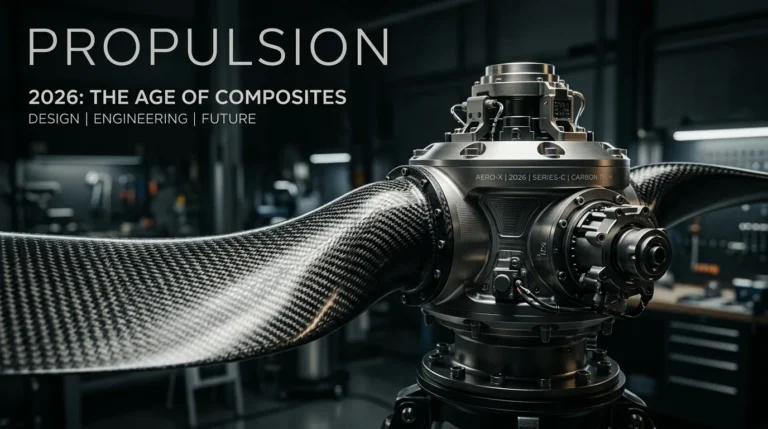
- Advanced Materials: Expect to see more sophisticated composite materials, offering even greater strength-to-weight ratios, impact resistance, and customizable flex characteristics. These could allow for props that subtly change shape under load for optimized performance across a wider RPM range.
- Modular & Tunable Systems: Some manufacturers are already developing modular propeller systems where blades or pitch can be easily swapped without replacing the entire unit, offering unparalleled flexibility for boaters to fine-tune their setup for different activities or loads.
- “Smart” Propellers: Imagine propellers with embedded sensors that provide real-time data on slip, cavitation, and even blade integrity directly to your helm’s display. This diagnostic feedback would enable immediate adjustments and proactive maintenance, moving us closer to truly adaptive propulsion systems.
- Hydrodynamic Optimization: Ongoing research in fluid dynamics continues to refine blade designs, aiming for even greater efficiency, reduced drag, and quieter operation, even at higher speeds.
The Ongoing Pursuit of Propeller Perfection
Mastering your propeller isn’t a one-time task; it’s an ongoing commitment to understanding your boat and its performance potential. By moving beyond basic definitions and embracing an iterative, data-driven approach to selection and tuning, you unlock a level of performance, efficiency, and enjoyment that many boaters never experience. Remember, the propeller is the final handshake between your engine and the water. Make sure that handshake is firm, confident, and perfectly optimized for your boating adventures in 2026 and well beyond.