

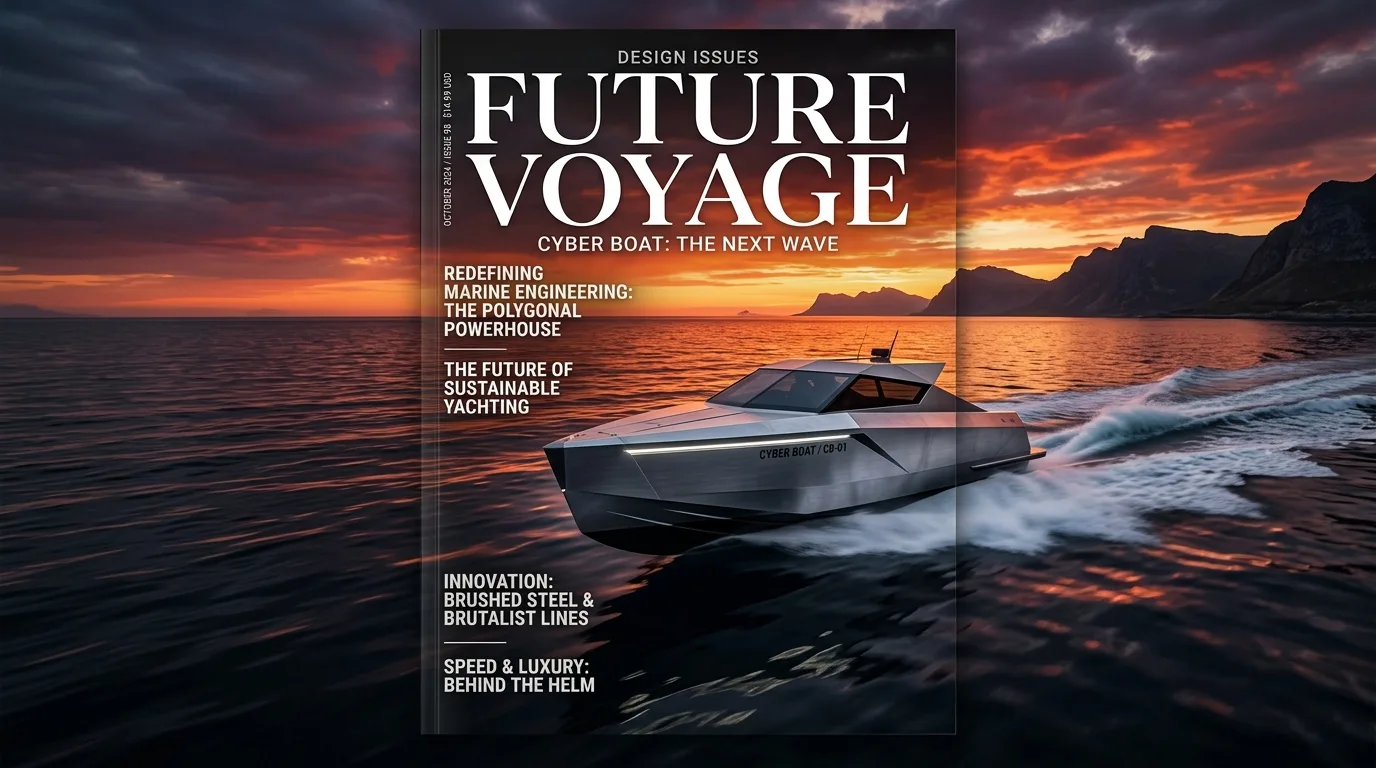

The Siren Song of a Tesla Cyber Boat: Fact or Futuristic Fantasy?
As someone who’s spent decades navigating the waters, from modest sailboats to luxurious motor yachts, I’ve seen countless innovations promise to revolutionize marine travel. The industry is constantly evolving, driven by passion, engineering, and increasingly, a desire for sustainability. So, when whispers of a “Tesla Cyber Boat” started circulating, sparked by the audacious design of the Tesla Cybertruck and Elon Musk’s penchant for pushing boundaries, my ears perked up. It’s hard to ignore the excitement that surrounds anything Tesla touches, and the idea of them entering the marine world is, admittedly, intriguing.
Table Of Content
- The Siren Song of a Tesla Cyber Boat: Fact or Futuristic Fantasy?
- The Amphibious Cybertruck: A Splashy Idea or a Sinking Ship?
- From Road Warrior to Water Wanderer: The Engineering Hurdles
- Envisioning a Dedicated Tesla Cyber Boat: What Could It Look Like?
- Features of a Potential Tesla Cyber Yacht
- The Business & Market Perspective: Navigating the Marine Industry
- Market Demand and Competition
- Infrastructure and Support
- Cost and Regulations
- The Future of Electric Boating (with or without Tesla)
- Impact and Inspiration
- Remaining Challenges and Opportunities
The concept isn’t just about a new boat; it’s about Tesla’s disruptive power, their battery technology, and their vision for electric transport extending beyond roads. Could Elon Musk truly be planning to expand Tesla’s electric revolution to the high seas, or even just your local lake? This isn’t merely a question of “if they can build it,” but “if it makes practical sense” for the unique challenges of the marine environment. Let’s cast off and explore the genuine possibilities and formidable hurdles facing a potential Tesla Cyber Boat, examining it through the lens of a seasoned boater and marine industry expert.
My years on the water, weathering storms and appreciating calm seas, have taught me that the marine world demands respect for its unique physics and unforgiving conditions. What works on asphalt often fails spectacularly on water. So, while the idea of a Tesla-branded vessel is undeniably cool, we need to separate the hype from the hydrodynamic realities.
The Amphibious Cybertruck: A Splashy Idea or a Sinking Ship?
One of the earliest and most captivating rumors wasn’t about a dedicated boat, but rather a “Tesla Cyber Truck boat mode.” Elon Musk himself has fueled this speculation, suggesting the Cybertruck’s stainless-steel exoskeleton and sealed battery pack could allow it to “serve briefly as a boat.” While the image of a Cybertruck cruising across a lake is certainly compelling, as a boater, I have to pump the brakes a bit and consider the engineering realities. This isn’t just about floating; it’s about control, safety, and longevity in a harsh environment.
From Road Warrior to Water Wanderer: The Engineering Hurdles
Let’s dissect the practicalities of turning a road vehicle, even one as robust as the Cybertruck, into a functional watercraft. The challenges are not minor; they are fundamental to marine design.
Buoyancy and Stability: The Fundamental Flaw
A vehicle’s ability to float is just the first step. The Cybertruck weighs several tons—approximately 6,500 to 7,000 pounds (around 3 to 3.2 metric tons). While its design might offer some natural buoyancy, proper marine stability is a complex science involving displacement, freeboard (the distance from the waterline to the deck), and the ability to handle waves without capsizing. A truck designed to hug the road is inherently top-heavy for water travel, making it highly susceptible to rolling in even moderate chop. Imagine a slight swell catching it broadside—that’s a recipe for disaster, not a leisurely cruise. For true stability, a vessel needs a low center of gravity and sufficient beam (width) relative to its weight, characteristics that are fundamentally at odds with a tall, relatively narrow truck.
Propulsion in Water: A Losing Battle for Tires
Tires are fantastic for traction on land, but they are incredibly inefficient in water. To move a heavy vehicle through water with any meaningful speed, you need dedicated marine propulsion. This would likely involve deploying specialized electric thrusters or propeller systems, which add significant complexity, weight, and failure points. Even if integrated, the power required to push tons of steel through water at a decent speed would rapidly drain even Tesla’s advanced batteries. For context, typical propellers are around 60-70% efficient in water, whereas turning tires in water might achieve less than 10% efficiency for forward thrust, making any journey agonizingly slow and short-lived.
Sealing and Corrosion: The Marine Environment’s Relentless Assault
“Waterproof” for a road vehicle typically means protecting against rain and shallow puddles. Marine environments are far more demanding. Constant immersion, saltwater corrosion, and sustained pressure require much more robust sealing for critical components like battery packs, motors, and interior electronics. Saltwater is relentlessly corrosive, and while stainless steel is resilient, it’s not impervious, especially when paired with dissimilar metals found in wiring and components, leading to galvanic corrosion nightmares. I’ve personally seen boats with minor breaches succumb to rapid corrosion, ruining expensive electronics and structural components. It’s a constant battle, even for purpose-built vessels.
Steering and Control: Beyond the Asphalt
Steering a vehicle on land with wheels is fundamentally different from steering a vessel in water, where hydrodynamics dictate movement. A Cybertruck’s steering mechanism is designed for asphalt, not for navigating currents, avoiding obstacles, or docking. Adapting this for precise marine control would require a complete overhaul of its handling system, including rudders or steerable thrusters. While we’ve seen fantastic amphibious vehicles throughout history, from the WWII DUKW to modern Sealegs craft that literally drive into and out of the water, these are highly specialized machines. They are designed from the ground up to compromise between land and sea performance, meaning they are rarely exceptional at either. A Cybertruck “boat mode” would likely be a party trick at best, suitable for crossing a placid pond, not for any serious marine application. My gut feeling, backed by years on the water, tells me it’s a charming fantasy that would quickly become a frustrating reality for anyone expecting true boating capability.
Envisioning a Dedicated Tesla Cyber Boat: What Could It Look Like?
If Tesla were to truly enter the marine market, a purpose-built watercraft would be the only viable path. This is where the potential for genuine disruption lies, leveraging Tesla’s strengths in battery technology, electric powertrains, and software. But how would a “Tesla Cyber Boat” translate the company’s automotive ethos into a vessel capable of navigating the dynamic marine world?
Features of a Potential Tesla Cyber Yacht
Let’s dream a little, but with a firm anchor in reality. What would a genuinely innovative Tesla boat offer?
Futuristic Design and Materials: Beyond Stainless Steel
Just like the Cybertruck, a Tesla boat would undoubtedly boast a striking, minimalist design. Expect sharp angles and perhaps extensive use of innovative, lightweight composites rather than just heavy stainless steel. Modern boat building already employs advanced materials like carbon fiber and vacuum-infused fiberglass to reduce weight and increase strength, crucial for electric propulsion. Tesla’s design team could push aesthetics, but marine engineering demands function over form, especially regarding hull efficiency. A sleek, low-drag hull form would be paramount for maximizing range and speed with electric power.
Advanced Battery Technology and Range: The Electric Boat’s Achilles’ Heel
This is Tesla’s wheelhouse, and where they could make the biggest impact. Current electric boats often struggle with range, especially at higher speeds. A 25-foot planing hull might only get 20-30 nautical miles at 20 knots on a single charge. Tesla’s high-density battery packs, sophisticated battery management systems, and rapid charging capabilities could significantly extend this. Imagine a marine equivalent of a “Supercharger” network, making longer voyages feasible. However, the energy demands of pushing a boat through water are far greater than rolling a car on land due to constant hydrodynamic drag. Even with the best batteries, range anxiety would remain a significant challenge for anything beyond coastal cruising or tender duty.
Efficient Propulsion Systems: Hydrofoils and Pod Drives
A Tesla boat wouldn’t just slap a motor on a conventional hull. They would likely explore cutting-edge propulsion. Hydrofoils, like those pioneered by Swedish company Candela, lift the hull out of the water at speed, drastically reducing drag and increasing efficiency by up to 80%. This would be a game-changer for electric range. Alternatively, advanced electric pod drives, which are compact, quiet, and offer exceptional maneuverability, could be integrated. Tesla’s expertise in electric motors would be invaluable here, potentially delivering torque and efficiency unmatched by current marine electric propulsion units.
Integrated Software and Autonomy: The Tesla Signature
This is where Tesla truly shines. Imagine a boat with an intuitive touchscreen interface controlling everything from navigation and propulsion to climate and entertainment, much like a Tesla car. Advanced autopilot features, similar to “Full Self-Driving,” could translate to automated docking, route planning, and collision avoidance systems. Real-time diagnostics and over-the-air software updates would revolutionize boat maintenance and functionality. Such integration could make boating far more accessible and less intimidating for new owners, a significant value proposition.
The Business & Market Perspective: Navigating the Marine Industry
Even with groundbreaking technology, entering the marine market is a complex undertaking. It’s a niche industry with its own rules, regulations, and established players.
Market Demand and Competition
Is there a viable market for a premium electric boat from Tesla? Absolutely. The demand for sustainable, quiet, and low-maintenance boating options is growing, particularly in the luxury tender market, lake boats, and eco-tourism sectors. Companies like Candela, X Shore, and Arc Boats are already carving out niches, demonstrating that electric boating is no longer just a concept. Tesla’s brand cachet alone would attract significant attention, potentially drawing new buyers into the marine world. However, the existing marine giants like Brunswick (Sea Ray, Boston Whaler), Beneteau, and Azimut are also investing heavily in electrification, so competition would be fierce and experienced.
Infrastructure and Support
One of the biggest hurdles for any electric boat manufacturer is the lack of charging infrastructure. Unlike the rapidly expanding EV charging network on land, marine charging stations are sparse. For a Tesla Cyber Boat to be truly practical for anything beyond short trips, a dedicated marine charging network, perhaps analogous to Tesla’s Supercharger network, would be essential. Furthermore, marine maintenance and service networks are highly specialized. Tesla would need to build or partner with existing marine service providers, which is a substantial logistical challenge for a newcomer.
Cost and Regulations
Tesla vehicles are premium products, and a Tesla boat would undoubtedly carry a similar price tag, likely putting it in the luxury segment. This limits the addressable market but aligns with Tesla’s brand. Beyond cost, marine vessels are subject to stringent safety and environmental regulations (e.g., USCG in the United States, CE marking in Europe). Designing a vessel to meet these standards from the ground up requires specialized marine engineering expertise and significant investment in testing and certification, a different ballgame than automotive regulations.
The Future of Electric Boating (with or without Tesla)
Regardless of whether Elon Musk officially launches a “Tesla Cyber Boat,” the conversation itself highlights the accelerating shift towards electrification in the marine industry. Tesla’s influence, even as an outsider, acts as a catalyst for innovation.
Impact and Inspiration
The “Tesla effect” has been profound in the automotive world, pushing legacy manufacturers to embrace electric vehicles with unprecedented speed. The mere speculation of Tesla entering the marine market encourages existing boat builders and startups to innovate faster, invest more in R&D for battery technology, efficient hull designs, and integrated systems. This ripple effect benefits all of us who love being on the water, driving the development of quieter, cleaner, and more enjoyable vessels.
Remaining Challenges and Opportunities
While the future of electric boating is bright, significant challenges remain. Battery energy density needs to continue improving to offer comparable range to internal combustion engines without prohibitive weight or cost. Charging infrastructure must expand dramatically. And the cost of electric boats needs to become more accessible to the average boater. However, the opportunities are immense: reduced emissions, quieter operation, lower maintenance, and the joy of guilt-free cruising. Imagine gliding silently across a serene lake at dawn, with only the sound of water lapping against the hull – that’s the promise of electric boating.
My personal take? While the Cybertruck “boat mode” is a delightful, if impractical, thought experiment, a purpose-built Tesla Cyber Boat could genuinely disrupt the marine industry. It wouldn’t be easy, and it would require a significant strategic pivot for Tesla, but their core competencies in electric powertrains, battery management, and software are perfectly aligned with the future of boating. Whether it’s Tesla or another innovator, the tide is turning towards electric power on the water. As boaters, we should be excited about the cleaner, quieter, and more sustainable future that awaits us on the waves.