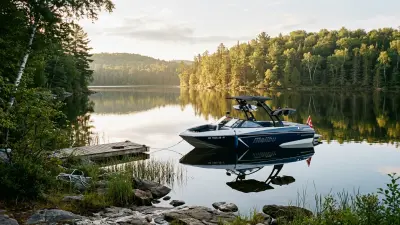

Quick answer: Axopar boats are Finnish-designed, Polish-built powerboats ranging from 22 to 45 feet, famous for their twin-stepped, deep-V hulls and modern modular layouts. Powered primarily by Mercury outboard engines, they deliver high fuel efficiency, speeds exceeding 45 knots, and exceptional offshore handling at an accessible price point compared to traditional luxury yachts.
The Engineering Behind Axopar Boats: Hull Design and Performance
The secret to Axopar’s remarkable performance lies in its low center of gravity and twin-stepped 20-degree deep-V hull architecture. Unlike traditional heavy-displacement cruisers, an Axopar hull cuts through chop rather than riding over it, significantly reducing vertical acceleration and slamming forces. Vacuum-infused GRP (glass-reinforced plastic) construction ensures maximum structural rigidity while keeping overall displacement low. This precise balance allows smaller outboard engines to achieve speeds that usually require far higher horsepower on heavier deep-V hulls.
Fuel efficiency is another major dividend of this hull geometry. By introducing air pockets beneath the running surface, the two steps reduce friction against the water surface. At a comfortable cruising speed of 30 knots, an Axopar 28 consumes approximately 1.2 to 1.4 liters of fuel per nautical mile when paired with a single Mercury Verado 300hp outboard. That efficiency translates directly into extended cruising range without necessitating oversized, heavy fuel tanks that would otherwise alter the vessel's trim and balance.
Sea keeping in rough conditions is where the sharp entry bow pays off. Measuring a razor-thin bow entry angle, the hull chops through head seas without throwing excessive spray over the bow. Integrated spray rails deflect water outward and down, maintaining a remarkably dry deck even when running into a two-meter chop at 25 knots. High freeboards along the walkaround decks ensure safety for children and crew moving between the bow lounge and aft cockpit.
On-the-water tip: Because twin-stepped hulls introduce air under the bottom to reduce drag, running trim requires a slightly different approach than a conventional deep-V. Avoid over-trimming the outboard engine upward at high speeds; keeping the drive tucked slightly lower allows the hull steps to aerate properly, preventing heel-instability during sharp turns in crosswinds.
Axopar Model Lineup: Specifications and Comparisons
From agile dayboats to multi-cabin offshore cruisers, the Axopar range is divided into clearly defined hull sizes: the Axopar 22, 25, 28, 37, and the flagship 45. Each size platform is typically offered in multiple deck configurations, including the Open, Sun-Top (ST), and fully enclosed Cross Cabin (XC) versions fitted with signature glass sliding doors and gull-wing cabin access doors. Choosing the ideal length depends heavily on your typical crew size, overnight requirements, and home port weather patterns.
The core of the range remains the Axopar 28 and 37, both celebrated globally for balancing trailerability or ease of docking with true open-water capability. The table below outlines key technical specifications across the primary model range to help you compare physical dimensions and power requirements before searching for an adventure powerboat on the market.
| Model | Length Overall (LOA) | Beam | Draft | Approx. Dry Weight | Recommended Engine | Top Speed |
|---|---|---|---|---|---|---|
| Axopar 22 | 7.20 m (23 ft 7 in) | 2.23 m (7 ft 4 in) | 0.80 m (2 ft 8 in) | 1,200 kg (2,645 lbs) | 115 - 200 hp Outboard | 45 knots |
| Axopar 28 | 8.75 m (28 ft 8 in) | 2.95 m (9 ft 8 in) | 0.80 m (2 ft 8 in) | 1,940 kg (4,276 lbs) | 200 - 400 hp Outboard | 48 knots |
| Axopar 37 | 11.50 m (37 ft 9 in) | 3.35 m (11 ft 0 in) | 0.85 m (2 ft 9 in) | 3,390 kg (7,474 lbs) | Twin 225 - 350 hp Outboard | 50+ knots |
| Axopar 45 | 13.90 m (45 ft 7 in) | 4.11 m (13 ft 6 in) | 1.00 m (3 ft 3 in) | 7,100 kg (15,650 lbs) | Triple 300 hp Mercury V8 | 48 knots |
Every model features modular aft deck options. Buyers can select from an open aft deck for sport fishing and water sports, an aft bench layout for max seating, a wet bar module with electric grills and refrigeration, or an aft cabin module providing comfortable sleeping quarters for two adults. This modularity ensures that second-hand buyers searching for an Axopar boat for sale can often find a configuration tailored exactly to their preferred activities.
Where Are Axopar Boats Made? Manufacturing and Construction
A common inquiry among prospective buyers relates to the brand's production footprint: where are Axopar boats made? Axopar is a Finnish company headquartered in Helsinki, Finland, where research, naval architecture, design, and commercial strategy take place. However, physical vessel manufacturing is executed in specialized, state-of-the-art boatbuilding facilities in Poland, particularly around the Świnoujście and Augustów maritime hubs.
Poland is recognized as one of Europe’s premier centers for recreational boat manufacturing, boasting high-tech composite facilities and a highly skilled workforce. By partnering with advanced manufacturing plants in Poland, Axopar maintains rigorous quality control while benefiting from efficient industrial scale. Vacuum resin infusion technology is standard across all lines, producing high hull strength-to-weight ratios while reducing volatile organic compound (VOC) emissions during production.
The manufacturing process incorporates top-tier marine components sourced globally. Aluminum fuel tanks, heavy-duty stainless steel fittings, glass windshields, and Garmin digital switching systems are integrated seamlessly during assembly. Every hull undergoes quality assurance water testing prior to factory dispatch, ensuring that whether a boat ships to North America, the Mediterranean, or Australia, it complies strictly with ISO and CE Category B (Offshore) or Category C (Inshore) standards.
Buying Guide, Pre-Owned Market, and Maintenance Insights
Investing in a new or pre-owned Axopar requires careful consideration of power options, electronics packages, and maintenance needs. Because outboard engines (predominantly Mercury SeaPro, Verado, or V8/V10 platforms) supply all propulsion, engine servicing is dramatically simpler and less costly than managing traditional inboard diesel engine installations and stern drives. Routine 100-hour or annual oil changes, impeller replacements, and lower unit gear lube swaps can be performed while the boat remains on a lift or trailer.
When reviewing used inventory or assessing an Axopar 37 price on the broker market, inspect the stepped hull running surface for gelcoat stress cracks or impacts from floating debris. The narrow running pad and steps require clean gelcoat surfaces to function properly. Furthermore, ensure that electrical systems—such as bow thrusters, trim tabs, and lithium-ion auxiliary battery banks—have been correctly maintained, as modern glass bridge displays draw continuous power during long days at anchor.
Essential safety gear on any high-speed outboard cruiser should never be overlooked. Ensure your vessel is outfitted with Type I or II PFDs for all passengers, a marine VHF radio with Digital Selective Calling (DSC), an EPIRB or personal locator beacon, and current USCG or regional authority visual distress flares. Due to the high speeds these boats easily achieve, fitting an automated engine kill-switch tether or wireless MOB (Man Overboard) system is strongly recommended for captain safety.
If you prioritize year-round boating across diverse weather conditions, opt for an XC Cross Cabin model fitted with electric heating or reverse-cycle air conditioning. For sunny climates where open-air socializing, swimming, and day cruising dominate, the Sun-Top variant paired with an aft wet bar delivers an unmatched balance of shade and outdoor living space. Start your journey by contacting a certified dealer to schedule a sea trial, experiencing firsthand how a stepped hull transforms handling in offshore conditions.
Frequently Asked Questions
Are Axopar boats suitable for rough ocean waters?
Yes, Axopar hulls are designed in Scandinavia specifically to handle challenging coastal chop and swell. Most models carry CE Category B (Offshore) certification, allowing them to safely navigate offshore conditions with wind speeds up to Force 8 and wave heights up to 4 meters.
Why does Axopar exclusively use outboard engines?
outboard engines offer a superior power-to-weight ratio, lower maintenance costs, and simpler replacement options compared to inboard engines. They also maximize interior deck space, allowing Axopar to fit aft cabins and spacious sunbeds where engine compartments would traditionally sit.
What is the typical cruising speed and fuel range of an Axopar 37?
An Axopar 37 typically cruises between 28 and 35 knots depending on sea state. At a 30-knot cruise with twin Mercury V8 300hp outboards, fuel consumption is around 2.3 liters per nautical mile, yielding a safe operating range of over 280 nautical miles on a standard fuel tank.