
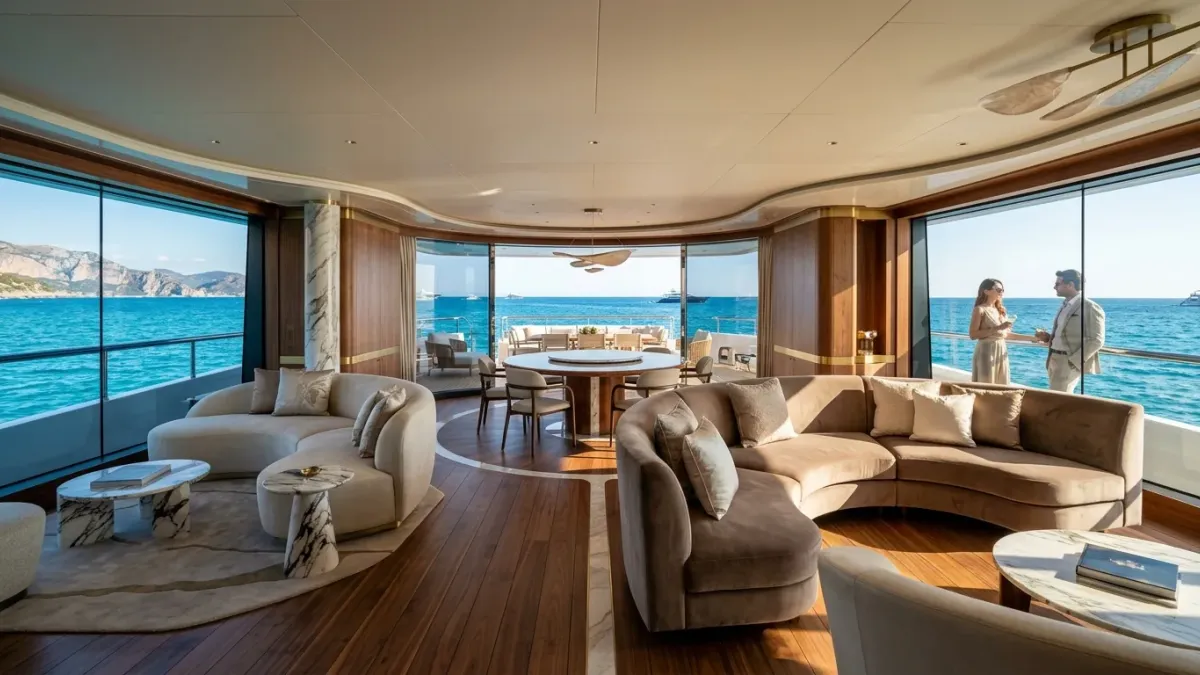
Quick answer: Designing a dream yacht interior requires balancing residential luxury with strict marine weight budgets and structural engineering. Current trends emphasize open Japandi minimalism, floor-to-ceiling glass connections, lightweight honeycombed marble or oak joinery, and hidden smart automation. Successful customization pairs your cruising lifestyle with specialized marine designers who understand acoustic dampening and high-durability, low-VOC materials.
Understanding Marine Ergonomics and Spatial Planning
Land-based architecture enjoys static foundations and virtually unlimited floor area, but marine interior design operates within a dynamic, three-dimensional envelope. Every square centimeter must accommodate hull curvature, structural bulkheads, fuel tanks, and mechanical risers while maintaining ergonomic comfort in rolling seas. Designing a vessel with a 100-foot Length Overall (LOA) and a 23-foot beam demands a sophisticated approach to volume allocation. The layout must allow easy movement for both guests and crew while ensuring that essential service pathways remain completely separate from owner relaxation zones.
When planning your layout, spatial flow dictates how the yacht feels during extended passages. For instance, open-plan saloons visually expand narrow beams, but they require recessed handrails, subtle fiddles, and rounded cabinetry corners to keep passengers secure when cruising through 4-to-6-foot swells. Storage solutions must be engineered into every under-berth drawer, ceiling recess, and bilge compartment without creating rattle points or adding unneeded weight to the vessel's center of gravity.
Customization starts by defining your primary cruising profile. An owner focused on weekend Mediterranean entertaining will prioritize sprawling main-deck saloons, multi-zone sound systems, and an open show-galley. Conversely, a family planning long-range blue-water passages across the Caribbean or South Pacific will sacrifice formal salon space to secure expansive pantry cold-storage, dual master staterooms, quiet sound-isolated study nooks, and heavily reinforced sea berths.
On-the-water tip: Never choose drawer slides or cabinet latches based on household standards. On a 90-foot motor yacht running at 22 knots through a quartering sea, standard residential soft-close latches will fail, spilling heavy crystal glassware across the deck. Always insist on heavy-duty, flush-mounted push-button sea latches or magnetic positive-lock catches rated for active marine movement.
Top Luxury Yacht Interior Design Trends
The aesthetic landscape of yacht design has shifted away from dark, heavy high-gloss mahogany and traditional brass fixtures toward bright, calming environments. Today's most sought-after interiors highlight tactile natural textures, expansive views, and uncompromised indoor-outdoor transitions that shorten the distance between guests and the ocean.
Seamless Indoor-Outdoor Living
Modern luxury motor yachts built by shipyards such as Ferretti, Benetti, and Sunseeker are reimagining how the main saloon connects with the aft deck. Full-height sliding glass doors now retract completely into hidden pockets or fold upward into overhead bulkheads at the touch of a button. Floor materials—such as brushed teak, textured limestone, or weather-treated oak—are matched across both interior and exterior decks to create a continuous visual line from the forward helm all the way to the hydraulic beach club.
Biophilic Aesthetics and Light Woods
Biophilic design brings natural elements inside to foster tranquility and physical well-being. Deep-toned varnished woods have largely given way to light-colored, open-grain timber like bleached oak, natural ash, and matte-finished teak. These pale hardwoods reflect ambient sunlight, making staterooms feel wider and taller. Complemented by organic linen textiles, woven leather bulkhead wraps, and integrated living plant displays, biophilic interiors create a grounded atmosphere that reduces sea fatigue during long voyages.
Integrated Smart Technology
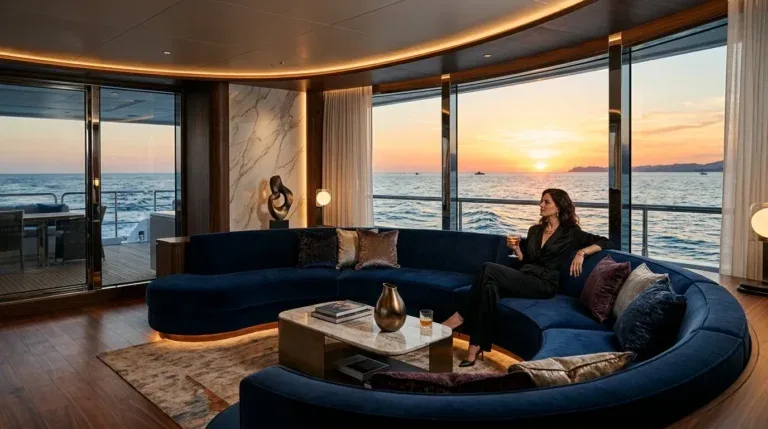
Technology on modern superyachts should be powerful yet nearly invisible. Centralized automation systems like Crestron or Lutron manage lighting scenes, motor-driven window shades, climate control, and audio distribution through custom glass touchscreens or mobile devices. Curved 4K OLED televisions drop silently from ceiling pockets or swivel out from custom joinery, keeping sightlines clear across the open water when entertainment systems are not in use.
Sustainable Marine Materials
Sustainability has evolved into a key design requirement. Modern owners frequently specify eco-conscious materials, including zero-VOC organic finishes, recycled performance fabrics, ethically harvested FSC-certified timber, and non-leather upholstery derived from agricultural byproducts. Sustainable design also extends to energy efficiency: installing LED lighting arrays with low thermal output reduces generator loads and cuts air-conditioning power consumption by up to 20 percent.
Engineering Luxury: Materials, Weight, and Noise Control
Choosing interior materials for a yacht involves much more than picking attractive finishes; it requires strict engineering discipline. Every kilogram added above the waterline directly impacts the vessel's vertical center of gravity (VCG), which affects roll period, fuel efficiency, and overall vessel stability. Standard solid marble slabs, heavy domestic furniture, and dense plaster walls cannot be installed on a hull without compromising seaworthiness.
To overcome these weight limits, custom marine joiners use advanced lightweight composites. Real marble, granite, and onyx are sliced into ultra-thin veneers just 3 to 5 millimeters thick and bonded onto aluminum honeycomb or carbon-fiber panels. This structural technique provides the timeless look of solid stone while cutting total material weight by over 70 percent. Similar techniques are applied to wooden cabinetry, where fine timber veneers cover lightweight foam-core or honeycomb substrate panels.
Acoustic and vibration management is another vital element of interior customization. Engine noise, generator hum, and hydraulic pump vibration can easily ruin a night's sleep if not properly isolated. Elite interior builders create floating interiors by mounting subfloors, bulkheads, and ceiling grids on rubber elastomeric isolation dampers. Combining sound-absorbing insulation panels with specialized acoustic dampening membranes ensures sound levels in master staterooms stay below a peaceful 45 decibels (dB) even while cruising at high engine load.
| Material / Design Element | Traditional Marine Approach | Modern Custom Solution | Weight & Performance Impact |
|---|---|---|---|
| Countertops & Vanity Tops | Solid 20mm Granite / Marble Slabs | 3-5mm Stone Veneer on Aluminum Honeycomb | Reduces weight by ~70-75% while keeping natural stone strength. |
| Cabinetry & Bulkheads | Solid Marine Plywood or Teak Boards | Nomex / Foam-core with Fine Timber Veneer | Lowers overall interior joinery weight by up to 50%. |
| Saloon Glazing | Standard Framed Tempered Glass | Laminated Structural Glass with UV Filters | Increases natural light, blocks 99% UV, reduces HVAC load. |
| Acoustic Isolation | Standard Fiberglass Batting Insulation | Floating Bulkheads on Elastomeric Mounts | Reduces cabin sound levels below 45 dB at cruising speed. |
Customization Secrets: Working with Yards and Designers
Navigating a custom yacht build or refit requires clear communication between the owner, interior designer, marine surveyor, and shipyard engineering team. The process begins with a detailed lifestyle audit, where you translate your personal routines—such as morning coffee habits, dining preferences, marine sports gear, and evening entertainment—into explicit spatial blueprints.
- Establish a strict weight budget early: Work closely with the naval architect to define maximum weight limits for joinery, soft furnishings, and loose deck furniture before approving final design sketches.
- Prioritize serviceability and inspection access: Ensure custom built-in cabinetry features hidden access hatches for greywater plumbing, electrical junction boxes, air-conditioning fan coils, and emergency shutoff valves.
- Select high-durability, marine-grade fabrics: Specify performance textiles treated for stain, mold, and UV resistance (such as solution-dyed acrylics) across all saloons and guest cabins to withstand salt air and wet swimwear.
- Mock up key living areas in 1:1 scale: Build full-scale cardboard or foam-core mockups of master head layouts, galley work triangles, and helm sightlines to test ergonomics before permanent installation.
To keep your project on budget and schedule, always review technical drawings against the ship's machinery layout. A common pitfall is specifying a floor-to-ceiling wardrobe that blocks a critical engine room extraction duct, forcing costly redesigns late in the build cycle. Establishing clear boundaries between decorative styling and functional machinery guarantees a beautiful result that runs smoothly on the water.
If you are planning to build a custom yacht or refit an existing vessel, your initial step should be hiring an experienced marine interior designer who works in tandem with your naval architect. Start by building a detailed list of your functional onboard requirements, and schedule a 3D layout simulation with your shipyard before signing off on final material samples.
Frequently Asked Questions
How much does a custom yacht interior cost?
Interior customization typically represents 25% to 40% of the total build or refit cost. On a mid-sized luxury motor yacht (70 to 100 feet), a full interior refit ranges from $500,000 to over $2,500,000, depending on structural changes, stone selection, custom joinery, and smart automation systems.
Can I use standard residential furniture on my yacht?
Using standard residential furniture is generally discouraged unless it is securely modified and anchored to the deck structure. Domestic furniture lacks built-in tie-down points, tends to be excessively heavy, and rarely features marine-grade, moisture-resistant frames or fabrics suitable for humid ocean environments.
How long does a full yacht interior refit take?
A comprehensive interior refit on a 80-to-120-foot yacht generally takes between 4 and 10 months. The timeline varies based on shipyard capacity, engineering approvals, custom joinery fabrication, and whether structural bulkheads or electrical systems are being relocated.
Sources
- Superyacht Design Guild
- Superyacht UK - British Marine Federation
- RINA Marine Classification Society