Ready to Ride? Your Ultimate Guide to Buying Your First Ski & Wakeboard Boat
The Call of the Wake: Your First Ski & Wakeboard Boat
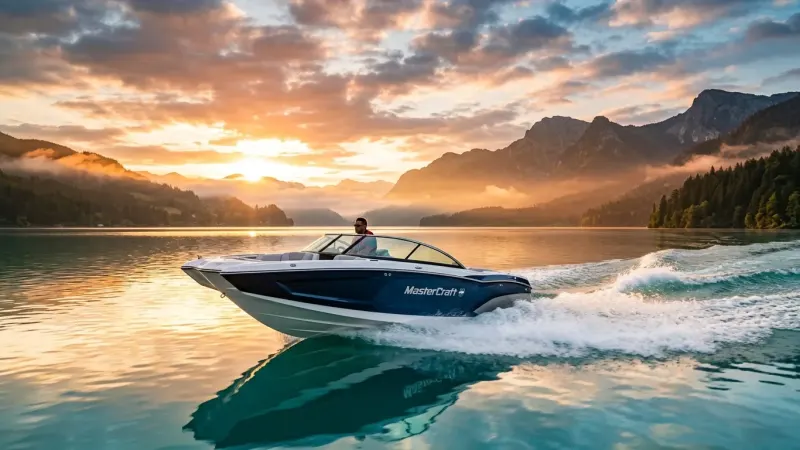
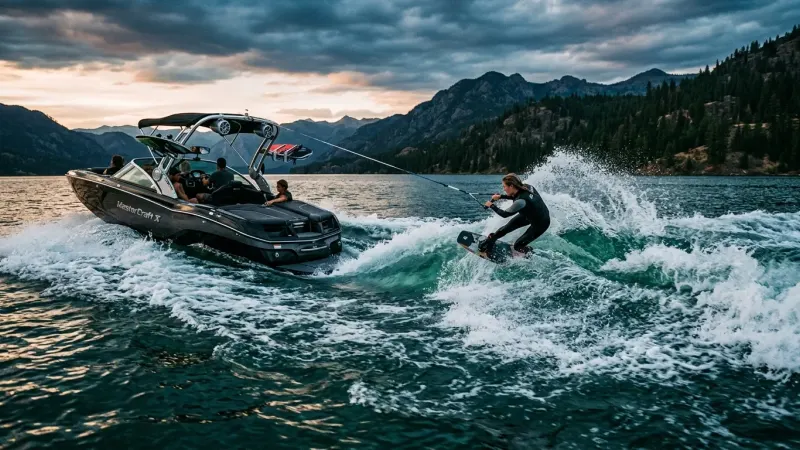
There’s a unique thrill that comes with cutting across a glassy lake, the sun on your face, the roar of the engine a symphony of power, and the promise of that perfect wake stretching behind you. If you’ve been dreaming of days filled with waterskiing, wakeboarding, or the increasingly popular wake surfing, then welcome aboard! At boatandsailboat.com, we believe a boat is more than just a vessel; it’s a gateway to freedom, family memories, and endless adventure. Buying your first ski & wakeboard boat is an exciting journey, and I’m here to guide you through it, just like I’ve helped countless enthusiasts find their perfect ride.
Table Of Content
- The Call of the Wake: Your First Ski & Wakeboard Boat
- What Makes a Ski & Wakeboard Boat Special?
- Hull Design & Performance
- Powering Your Passion: Engine & Propulsion
- The Magic of Wake Shaping
- The Tower: Your Towing Command Center
- Interior Layout & Comfort
- Sizing Up Your Dreams: Boat Categories
- New or Used: Making the Smart Choice
- Crucial Inspection Points for Used Boats
- Keeping Your Ride Prime: Essential Maintenance
- Real-World Examples & Trusted Brands
- Your Next Wave Awaits: Taking the Plunge
What Makes a Ski & Wakeboard Boat Special?
Unlike general-purpose runabouts or fishing boats, ski and wakeboard boats are purpose-built for towing watersports. Every design element, from the hull shape to the engine placement, is optimized to create the ideal wake for your activity, provide ample power, and keep your crew comfortable.
Hull Design & Performance
Most ski and wakeboard boats feature a planing hull – a hull design that lifts out of the water at speed, reducing drag and allowing for higher speeds and a more stable platform for towing. Construction is almost universally fiberglass for its durability, ease of maintenance, and ability to be molded into complex shapes.
- Direct Drive: Traditionally favored by waterskiers, these boats have the engine mounted mid-ship, with the propeller shaft running directly aft. This creates a flatter, smaller wake ideal for slalom skiing and provides balanced handling.
- V-Drive: The engine is typically mounted further back in the stern, with the transmission reversing the direction of the shaft to drive the propeller forward. This design allows for more cockpit space and, crucially for wakeboarders and surfers, helps create a larger, steeper wake.
Powering Your Passion: Engine & Propulsion
Ski and wakeboard boats almost exclusively use inboard engines for safety (no spinning propeller at the stern for swimmers/boarders) and optimal weight distribution. While many powerboats use brands like Yanmar or Volvo Penta, dedicated ski boats often feature specialized gasoline inboard engines from manufacturers like PCM (Pleasurecraft Marine), Indmar, or Ilmor. Look for ample horsepower and torque to get riders up quickly and maintain consistent speeds, crucial for a good pull.
The Magic of Wake Shaping
Modern wake boats are engineering marvels designed to sculpt the perfect wave:
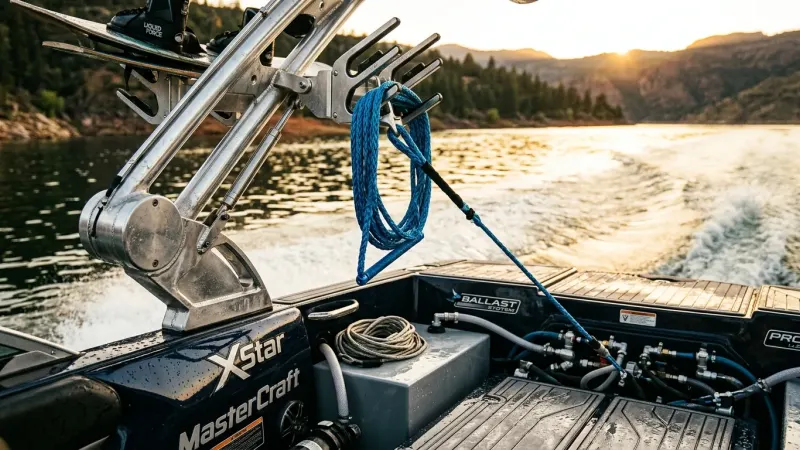
- Ballast Systems: These are tanks (or bags) filled with water to add weight to the boat, making it sit deeper and displace more water, thus creating a larger wake. They are often controlled electronically.
- Surf Tabs / Plates: Adjustable plates on the transom (the flat surface at the back of the boat) that manipulate water flow to fine-tune the wake’s shape, size, and particularly for wake surfing, its clean face.
- Speed Control: GPS-based systems maintain precise speeds, essential for consistent wake quality and rider safety.
The Tower: Your Towing Command Center
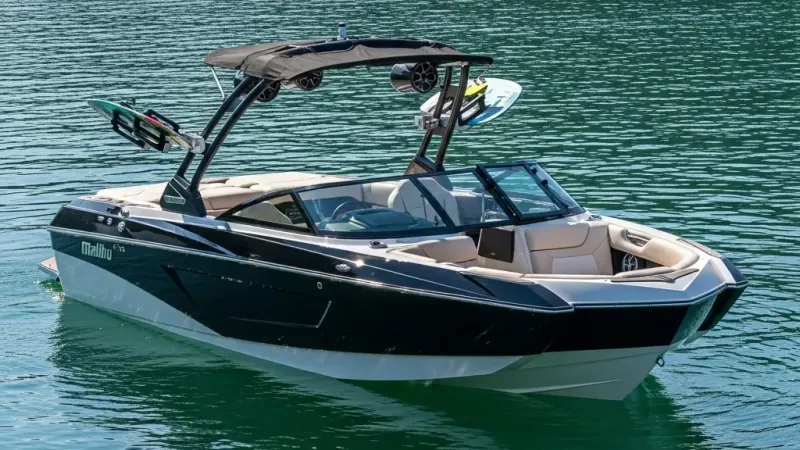
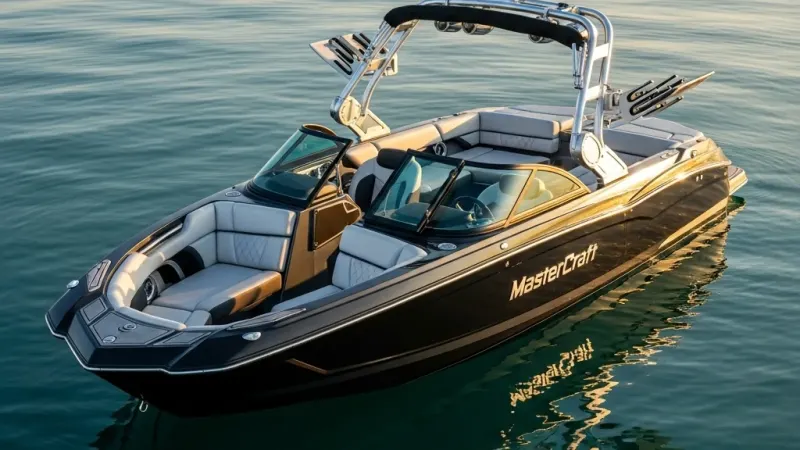
A wakeboard tower is a robust structure that rises from the gunwales (the upper edges of the boat’s sides). It provides a higher tow point than a stern pylon, lifting the rope and rider for better air and a more natural pull. Many towers are foldable for easier storage or trailering, and often house board racks and speakers.
Interior Layout & Comfort
Look for comfortable seating for your crew, ample storage for ropes, vests, and boards, and a large, accessible swim platform for easy boarding after a ride. A good sound system is also a must for many!
Sizing Up Your Dreams: Boat Categories
Ski & wakeboard boats generally range from 18 to over 25 feet. Consider your typical crew size, storage options, and trailering capabilities.
- Smaller (18-20 ft): Excellent for day trips, easy to trailer and launch, often more budget-friendly. Great for pure waterskiing or smaller wakes for beginning wakeboarders. Think nimble and fun.
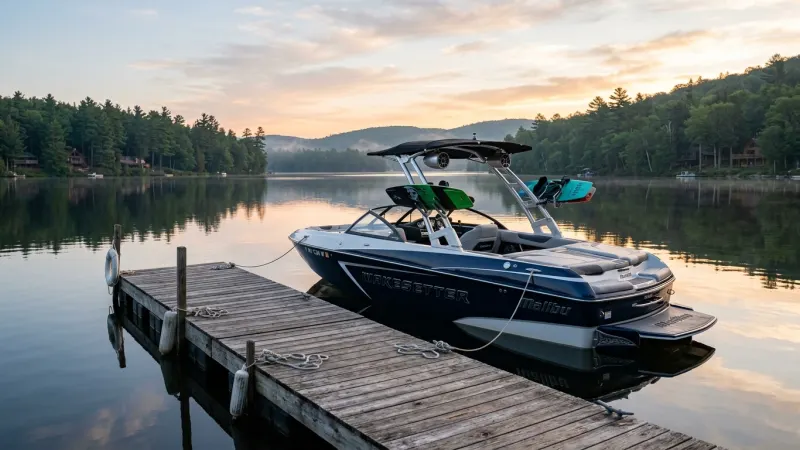
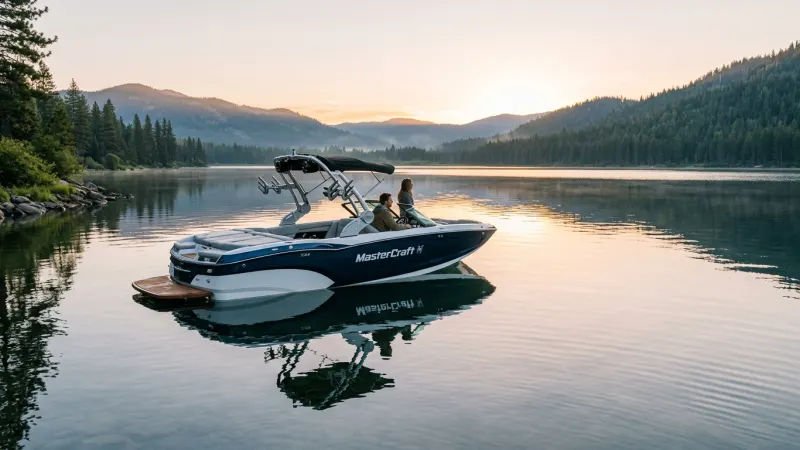
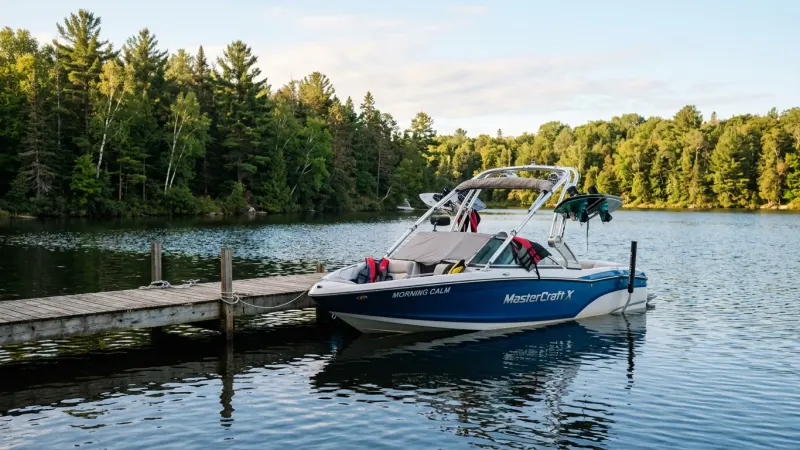
- Medium (21-23 ft): The sweet spot for many families. Offers a good balance of space, wake performance, and maneuverability. Can comfortably handle multiple watersports disciplines. Many Malibu Wakesetter or MasterCraft NXT models fit here.
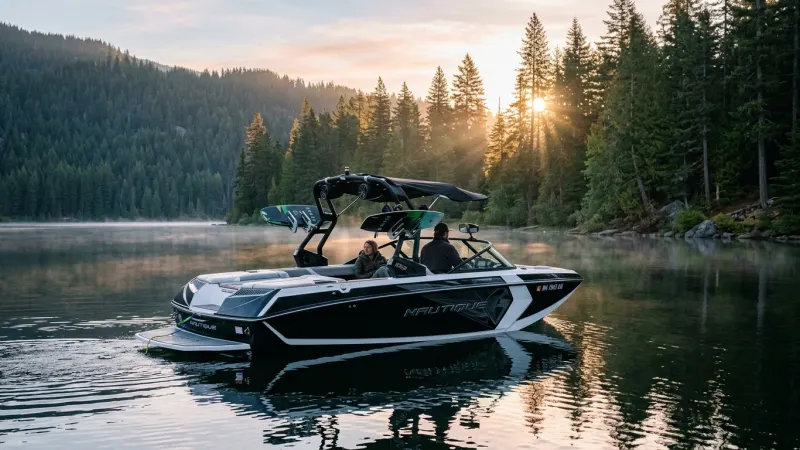
- Larger (24+ ft): These are often luxury multi-sport machines with advanced wake-shaping tech, immense ballast, and seating for larger groups. Ideal for serious wake surfing and comfortable cruising. Examples include larger Nautique Super Air Nautique or Tige RZX models.
New or Used: Making the Smart Choice
A new boat offers warranties and the latest tech, but a well-maintained used boat can be a fantastic value. For your first boat, a used vessel can be a smart entry point into the lifestyle.
Crucial Inspection Points for Used Boats
When looking at a used ski & wakeboard boat, treat it like gold. A thorough inspection is key:
- Engine Condition: Check for service records. Look for signs of corrosion, leaks, or unusual noises during a test run. A qualified marine mechanic inspection is non-negotiable.
- Hull Integrity: Inspect for cracks, deep gouges, or signs of past repairs. Pay close attention to the keel (the bottom centerline) and transom.
- Propeller & Running Gear: Check for dings or bends in the prop, and ensure the rudder and steering feel solid.
- Electrical & Electronics: Test all lights, gauges, ballast systems, and sound systems. Ensure all wake-shaping controls function correctly.
- Interior & Upholstery: Look for rips, tears, or sun damage. Check the condition of the swim platform and tower.
- Trailer: Don’t forget the trailer! Check tires, brakes, lights, and bearings.
Keeping Your Ride Prime: Essential Maintenance
To ensure your boat delivers years of fun, follow a consistent maintenance schedule:
- Engine Service: Change oil, filters, and spark plugs every 100-200 hours or annually, whichever comes first. Refer to your engine manual.
- Hull Cleaning: Wash your hull regularly to prevent buildup and maintain its shine. Annual haul-out and bottom paint might not be necessary if you trailer, but regular cleaning is.
- Winterizing: If you live in a cold climate, proper winterizing steps (draining water, adding antifreeze, fuel stabilization) are crucial to prevent freeze damage.
- Propeller Care: Inspect the prop before and after each use for damage. A balanced, clean prop ensures peak performance.
- Interior Care: Clean upholstery, condition vinyl, and ensure ballast tanks are drained and clean to prevent mold.
Real-World Examples & Trusted Brands
When you start your search, you’ll quickly recognize leading brands like MasterCraft, Malibu, Nautique, Supra, Tige, and Centurion. Each has its loyal following and distinct features, offering a wide range of models from entry-level to high-performance beasts.
Your Next Wave Awaits: Taking the Plunge
Buying your first ski & wakeboard boat is an investment in fun and memories. Start by researching models that fit your budget and primary watersport interest. Visit local dealerships, attend boat shows, and most importantly, arrange for test drives. Nothing beats experiencing the boat on the water! If buying used, always get a professional marine survey and mechanical inspection.
Embrace the journey, learn the ropes, and prepare for a lifetime of exhilarating moments on the water. The freedom, the sunsets, the laughter with friends and family – it’s all waiting for you. Welcome to the boatandsailboat.com family, where every wave tells a story!