
Quick answer: Alumacraft jon boats range from compact 10-foot utility skiffs to 20-foot heavy-duty commercial rigs built from durable 5052 aluminum alloy. Models like the popular 1648 offer an ideal balance of stability, 48-inch bottom width, and shallow draft, making them versatile for fishing, hunting, and utility tasks across shallow inland waters.
Understanding Jon Boat Design: Hull Form, Rivets, and Materials
To appreciate how Alumacraft jon boats perform on the water, you must first understand the fundamental engineering behind flat-bottom hulls. Unlike deep-V offshore hulls that knife through rolling ocean swells, a flat-bottom jon boat relies on surface displacement to float in shallow water, often drawing as little as 3 to 6 inches of draft under load. This low draft allows anglers and hunters to glide over submerged logs, mud flats, and gravel bars without grounding out.
Alumacraft utilizes marine-grade 5052 H34 aluminum alloy across its utility and flat-bottom lineup. This metal composition provides high tensile strength alongside outstanding corrosion resistance in both freshwater and brackish estuarine environments. Depending on the model series, construction methods split into two main categories: traditional riveted hulls and heavy-duty all-welded hulls. Riveted models, such as the lightweight Sierra and standard Jon series, utilize high-capacity structural ribs and aircraft-grade rivets to allow slight frame flexing without stress-cracking over time.
All-welded Jon lines, often designated under their utility or commercial divisions, feature continuous seam welds along the bow, chine, and transom joints. These heavy-gauge hulls (often utilizing 0.100-inch aluminum thickness compared to 0.065-inch to 0.080-inch on entry-level models) withstand hard impacts against granite riverbeds, submerged stumps, and concrete launch ramps. When paired with proper boat safety equipment and USCG-required PFDs, these rugged aluminum platforms offer decadelong operational lives with minimal structural wear.
On-the-water tip: When rigging an outboard motor on a flat-bottom jon boat, pay close attention to your engine's cavitation plate position relative to the bottom chine. Mounting the plate too high leads to propeller ventilation during tight turns on shallow river stretches, while setting it too low increases drag, dramatically reduces fuel efficiency, and invites lower-unit strikes on submerged obstructions.
Decoding Alumacraft Naming Conventions and Sizes
Understanding Alumacraft's numerical model designations is remarkably straightforward once you learn the industry shorthand. Model numbers like 1236, 1448, 1648, or 1860 instantly convey two essential dimensions: the overall length in feet followed by the bottom width in inches. For instance, an Alumacraft 1648 measures 16 feet long overall (LOA) with a 48-inch flat bottom width. It is crucial to distinguish bottom width from total beam width, as the beam includes the flared gunwales at the top of the boat, which typically extend an extra 10 to 20 inches beyond the bottom flat.
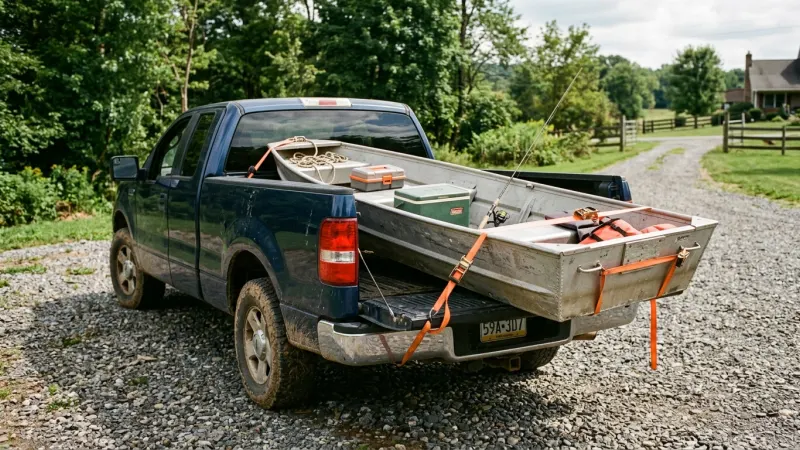
- Compact Utility (10' - 12' Lengths): Bottom widths ranging from 32 to 36 inches. Designed for single occupants or small gear loads on farm ponds, small lakes, and narrow creeks. Easy to transport in a pickup truck bed.
- Mid-Size Workhorses (14' - 16' Lengths): Bottom widths ranging from 36 to 48 inches. Excellent balance of deck space, payload capacity, and trailering ease. Accommodates 2 to 3 passengers with moderate outboard power (15 to 40 hp).
- Heavy-Duty & Commercial (17' - 20' Lengths): Bottom widths ranging from 52 to 70 inches. Capable of handling larger outboards (50 to 115 hp), side-consoles or center-consoles, heavy duck blinds, and substantial passenger weight in open bays or major river systems.
Choosing the right beam width directly affects lateral stability. A narrow 36-inch bottom will feel tender when standing on the gunwale to cast a fly or retrieve a duck, whereas a 48-inch or 60-inch bottom creates a solid platform that remains surprisingly level even when multiple anglers stand up simultaneously to land fish.
Detailed Specification Breakdown Across Popular Models
Selecting the ideal hull requires matching your intended outboard motor weight, maximum trailering capacity, and passenger load to factory specs. Overloading a flat-bottom skiff severely compromises transom freeboard and increases swamp risks in rough water or heavy powerboat wakes. Below is a detailed breakdown of core specifications across popular Alumacraft configurations.
| Model | Length | Beam Width | Capacity | Best Use |
|---|---|---|---|---|
| 1232 | 12 ft | 32 in | 400 lbs | Small lakes, solo |
| 1648 | 16 ft | 48 in | 800 lbs | Fishing, utility |
| 1860 | 18 ft | 60 in | 1,200 lbs | Larger groups |
| Hunting Series | 16 ft | 50 in | 900 lbs | Hunting, rugged |
| Model | Length (LOA) | Bottom Width | Beam Width | Hull Gauge | Max HP Rating | Max Weight Cap. |
|---|---|---|---|---|---|---|
| Alumacraft 1236 | 12' 0" (3.66m) | 36" (0.91m) | 55" (1.40m) | 0.065" | 10 HP | 470 lbs (213 kg) |
| Alumacraft 1448 | 14' 0" (4.27m) | 48" (1.22m) | 70" (1.78m) | 0.070" | 25 HP | 820 lbs (372 kg) |
| Alumacraft 1648 | 16' 0" (4.88m) | 48" (1.22m) | 70" (1.78m) | 0.080" | 35 HP (Tiller) / 40 HP | 1,010 lbs (458 kg) |
| Alumacraft 1860 | 18' 0" (5.49m) | 60" (1.52m) | 85" (2.16m) | 0.100" | 90 HP | 1,450 lbs (658 kg) |
| Alumacraft 2070 | 20' 0" (6.10m) | 70" (1.78m) | 94" (2.39m) | 0.100" | 115 HP | 1,800 lbs (816 kg) |
When reviewing these figures, consider total operational weight. A 1648 carrying a 25-horsepower Yamaha or Mercury outboard motor, a trolling motor battery, 6 gallons of fuel, fishing gear, and two adult passengers will quickly push past 700 pounds. Choosing a model with comfortable capacity overhead ensures high safety margins when weather conditions deteriorate unexpectedly on open water.
Real-World Use Cases: Matching Hull to Mission
Every boater's local waters demand specific hull characteristics. A layout that excels in flooded timber might prove uncomfortable in open lake chop. By matching the structural layout of your Alumacraft to your primary activity, you maximize comfort, safety, and longevity on the water.
Shallow-Water River Fishing and Jet-Drive Rigging
Rocky, fast-flowing rivers like the Susquehanna, White, or Missouri rivers present hazardous conditions for propeller-driven craft. In these environments, mid-sized Jon models like the 1648 or 1860 equipped with factory tunnel hulls or outboard jet-drives are the gold standard. The flat bottom allows the hull to plane swiftly in shallow water, while an outboard jet pump eliminates the low-hanging lower unit, allowing passage through shallow, fast-moving waters without damaging equipment.
Waterfowl Hunting in Flooded Timber and Marshes
Duck hunters require rugged durability, shadow-concealing olive drab or factory marsh camouflage finishes, and spacious open deck layouts. Low gunwales make throwing out duck decoys, retrieving retriever dogs, and setting up temporary blind frames straightforward. Welded models are particularly favored here; hitting submerged cypress knees or frozen slush at speed will dent lighter aluminum gauge craft, whereas a 0.100-inch thick welded hull easily withstands such impacts.
Inland Lake Angling and Custom Utility Builds
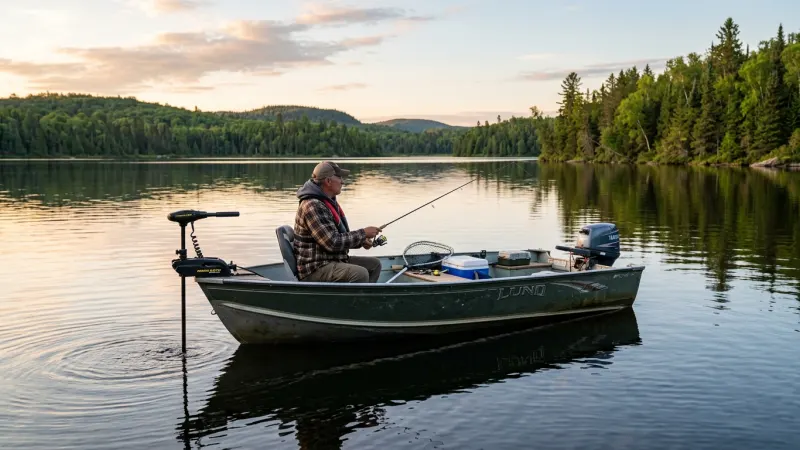
For freshwater anglers targeting bass, crappie, or catfish on inland reservoirs, smaller Jon models serve as modular canvasses for custom DIY decks. Adding marine-grade plywood or aluminum casting platforms, carpet or EVA foam flooring, bow-mounted trolling motors, and smart depth sounders transforms a modest hull into an effective tournament rig. For guidance on powering electrical systems safely on custom builds, consult our comprehensive guide on marine electrical setup and maintenance.
Essential Maintenance and Care Practices for Aluminum Hulls
Although aluminum jon boats are renowned for low-maintenance durability compared to gelcoat-finished fiberglass vessels, neglecting basic care can lead to avoidable performance issues. Electrolysis, crevice corrosion, and loose rivets are the primary issues affecting neglected utility hulls.
Galvanic corrosion occurs when dissimilar metals—such as stainless steel fasteners, bronze fittings, or mounting brackets—come into direct electrical contact with raw aluminum in the presence of an electrolyte like salt or brackish water. Always isolate steel fittings using plastic washers or marine-grade silicone sealant. Furthermore, if you store your vessel on a trailer equipped with pressure-treated wood bunks, ensure the bunk carpet remains in good condition. The chemicals used in pressure-treated lumber (specifically copper azole) aggressively corrode bare aluminum when damp.
For riveted Alumacraft hulls that have logged decades of heavy service over rough chop, minor leaks can occasionally develop around stressed bottom rivets. Rather than smearing silicone over leaky joints on the exterior, repair them properly from the inside using marine epoxy sealant or by re-bucking the rivets using a pneumatic hammer and backing dolly to restore factory-tight seals.
Frequently Asked Questions
Is an Alumacraft 1648 big enough for open coastal bays?
While an Alumacraft 1648 is exceptionally stable on calm lakes, marshes, and rivers, its low gunwales and flat-bottom hull design are not suited for steep open-bay chop or coastal ocean swells. Flat bottoms slap heavily in choppy waves and can take on water if wind-driven spray mounts over the bow.
What size motor should I put on an Alumacraft 1448 jon boat?
An Alumacraft 1448 is typically rated for up to a 25 horsepower outboard motor. A 15 hp to 20 hp outboard provides excellent fuel economy and easily brings two passengers and fishing gear onto a smooth plane at speeds around 20 to 25 mph.
Are riveted jon boats worse than all-welded jon boats?
Neither design is inherently worse; they serve different operational roles. Riveted hulls are lighter, more economical, and offer built-in flex that performs well during normal recreational fishing and utility use. All-welded hulls are thicker, heavier, structurally stiffer, and better suited for heavy commercial abuse, rocky river navigation, and high-horsepower outboards.
How do I stop my aluminum jon boat floor from getting blistering hot in the sun?
Bare aluminum decks absorb heat rapidly under direct sunlight. Installing closed-cell EVA foam flooring marine tiles or applying light-colored non-skid marine deck paint reflects heat, drastically reduces deck slip, and dampens hull noise that could spook fish in shallow water.
Choosing Your Next Steps
If you need an easily towable, budget-friendly vessel for solo farm pond trips or light creek fishing, a riveted 12 to 14-foot Alumacraft utility boat offers unbeatable value and effortless garage storage. However, if your plans involve navigating shallow, rocky river rapids, hauling multiple hunting partners with heavy gear, or mounting bow-mounted trolling motors alongside high-horsepower outboards, investing in an all-welded 1648, 1860, or 2070 platform provides the safety margin, deck space, and structural strength required for decades of demanding outdoor service.